01
What a Thermal Break Actually Does to Your Cooling Bill
A thermally broken frame splits the aluminum extrusion into interior and exterior halves connected only by a low-conductivity polyamide strip roughly 24 mm wide.
That strip interrupts the direct metal-to-metal heat path that otherwise drives solar gain straight into an air-conditioned room. In Dubai, where ambient temperatures regularly exceed 45 °C between June and September, an unbroken aluminum frame can raise the surface temperature of the interior profile to levels that noticeably increase cooling loads. Paired with a double-glazed unit carrying a Solar Heat Gain Coefficient of 0.25 or below, the thermal break reduces the total heat flux through the door assembly by a significant margin — measurable on your DEWA electricity bill within the first summer.
02
Glass Specification for Dubai's Specific Conditions
Choosing glass for a sliding door in Dubai involves three overlapping challenges: extreme solar radiation, high-TDS water from DEWA's desalinated supply, and Shamal dust events between May and July that deposit abrasive silica on every exposed surface. We specify double-glazed units with a low-E coating on the inner face of the outer pane, argon or krypton fill, a U-value at or under 1.4 W/m²K, and an SHGC of 0.25 or below. A factory-applied hydrophobic nano-coating prevents the mineral-scale etching that Dubai's 500–700 mg/L TDS water causes on untreated glass, and a scratch-resistant surface treatment maintains optical clarity after repeated dust-storm abrasion. These aren't optional upgrades here — they're baseline specifications.
03
Frame Materials and Finishes That Last in Dubai's Heat
Standard 6063-T5 aluminum extrusions perform adequately in temperate climates but can exhibit measurable track expansion and sealant stress during Dubai's summer peaks.
We use 6063-T6 alloy profiles where span widths exceed 2.4 meters, providing a higher yield strength to resist thermal-expansion warping in floor tracks. Powder-coat finishes are applied at 60–80 µm thickness, rated to withstand continuous exposure at 80 °C surface temperature — relevant because dark-finish frames sitting in direct UAE sun regularly approach this range. Stainless-steel Grade 316 hardware is standard on all coastal or high-humidity installations; mild-steel components corrode rapidly in Dubai's humidity cycles that spike above 90 percent during summer nights.
04
Permit Requirements for Sliding Door Installations in Dubai
Any modification to a structural wall opening — widening, forming a new aperture, or inserting a load-bearing lintel — requires a No Objection Certificate and building permit from Dubai Municipality before work begins.
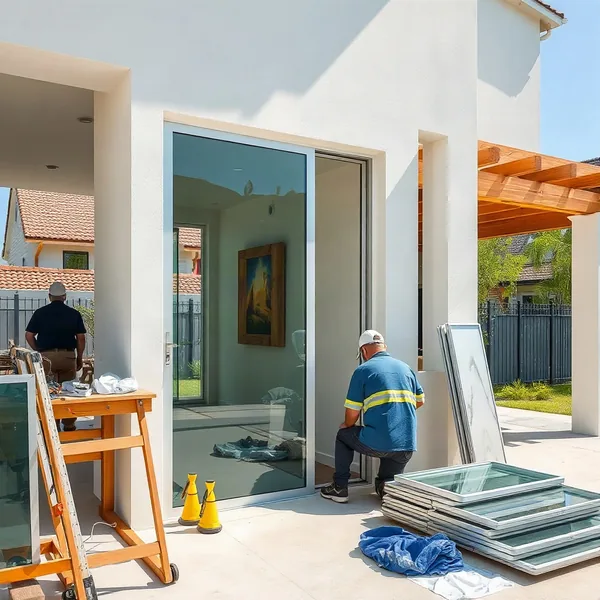
We coordinate that documentation process on your behalf, including preparation of the permit submission package and liaison with a licensed engineering consultant for stamped structural drawings where required. Lead times typically add 2 to 4 weeks ahead of fabrication. For villa installations in compound communities, many master developers also require separate community management approval, so we recommend starting permit coordination as early as the design stage rather than after you've selected your door configuration.
05
How This Service Connects to Our Wider Glazing Portfolio
A thermally broken sliding door rarely installs in isolation.
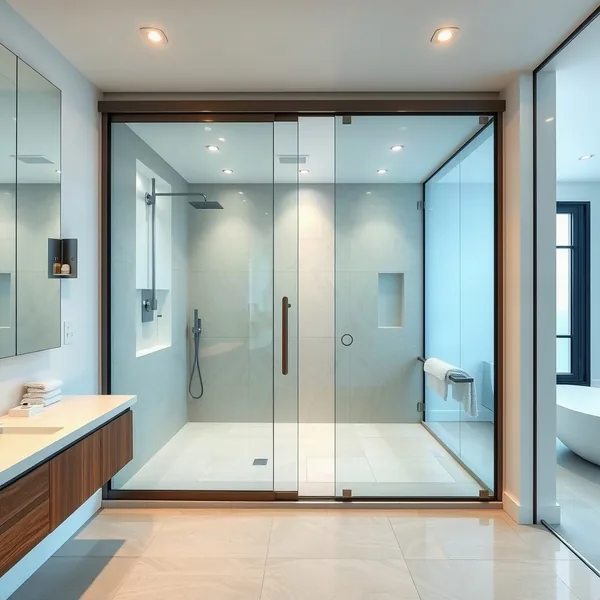
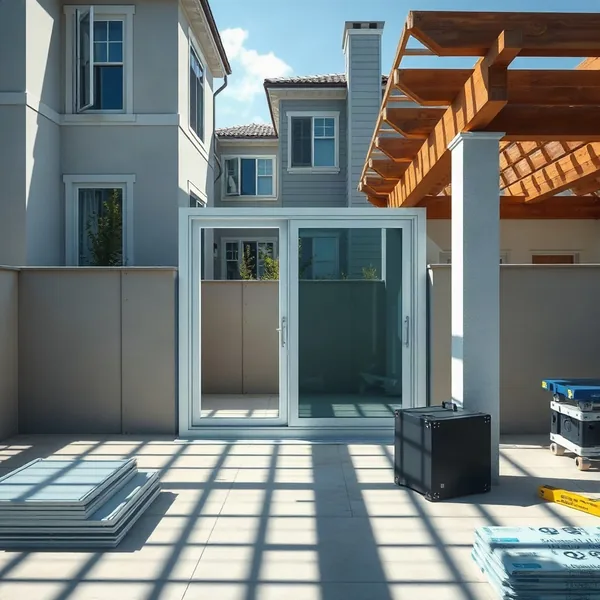
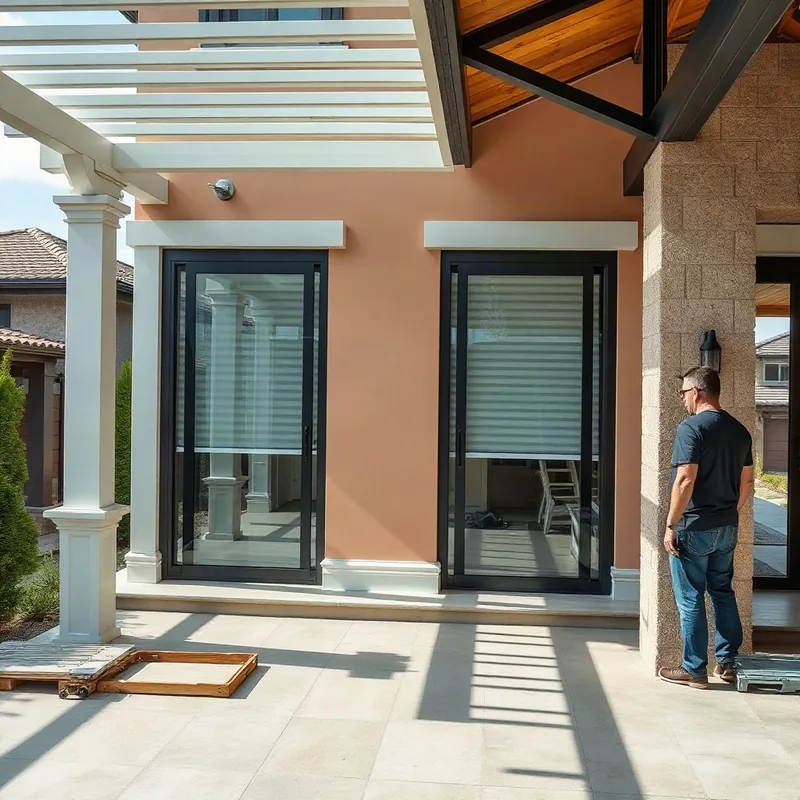
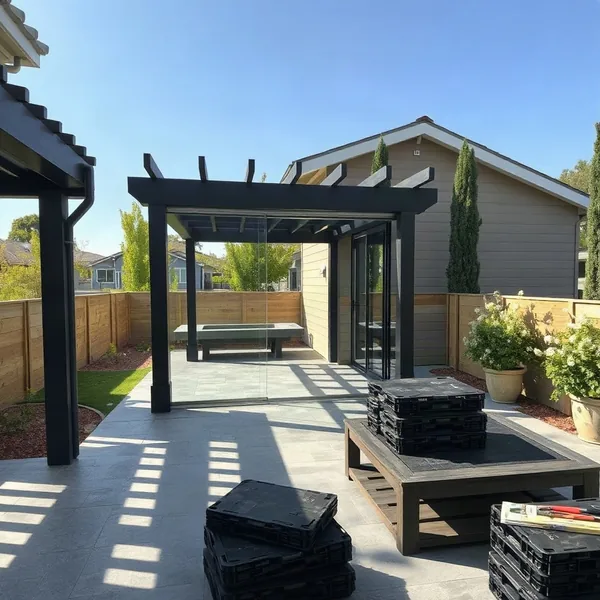
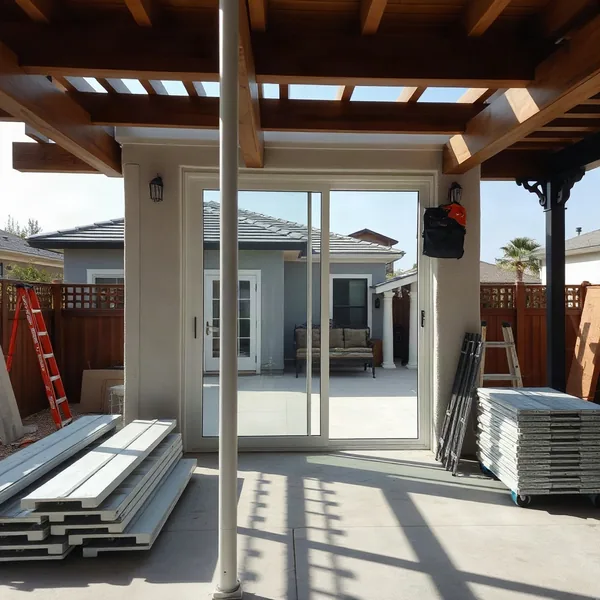
It typically meets a pergola deck, opens onto a pool terrace with glass fencing, or leads into a shower room fitted with frameless enclosures — all services we fabricate in-house. Because we control the full scope, the threshold detail between the sliding door floor track and an adjacent glazed pergola deck can be engineered as a single drainage and sealant system rather than two separate trades working independently. We've completed projects where the same aluminum alloy family runs from the pergola rafter to the sliding door frame to the shower channel, creating thermal and aesthetic continuity across the entire outdoor living extension.