01
What Is a Non-Thermal-Break Casement Window?
solid aluminium profilesingle-pane or double glazingframe conductivity
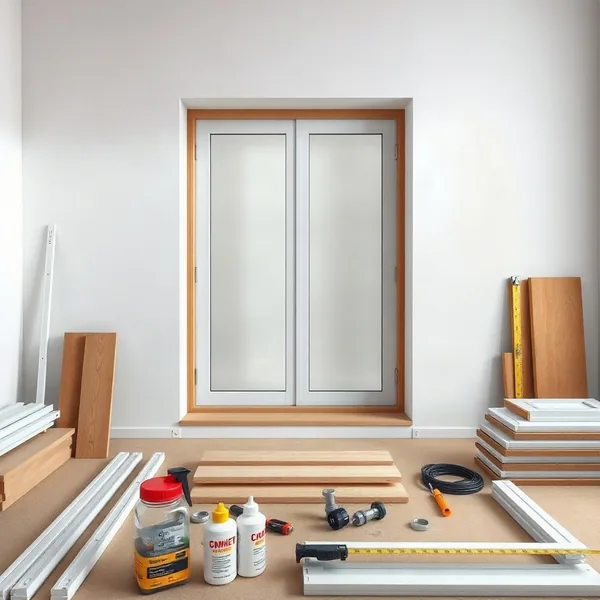
A non-thermal-break casement window is a side-hinged aluminium frame built from a single continuous solid aluminium profile, with no polyamide or insulating barrier separating its interior and exterior faces.
Frame conductivity is therefore unrestricted — heat and cold transfer directly through the metal from outside to inside. These windows accept either single-pane or double glazing depending on the client's specification, though the frame itself remains thermally unbroken regardless of glass choice. In Dubai's context, where ambient summer temperatures regularly exceed 45 °C, that direct conduction matters significantly on sun-exposed elevations. On shaded or interior installations, however, the absence of a thermal barrier is far less consequential, and the simpler profile produces a clean, low-profile aesthetic suited to utilitarian applications.
02
How Much Does Non-Thermal-Break Installation Cost in Dubai?
aluminium extrusionglazing beadlabour cost
Non-thermal-break casement windows cost roughly 20–35% less in raw materials than thermal-break equivalents because the aluminium extrusion omits the factory-pressed polyamide insert.
In Dubai, installed pricing typically starts around AED 350–550 per square metre for single-glazed units and rises to AED 600–900 per square metre for double-glazed configurations. The glazing bead specification, powder-coat colour, and hardware grade all influence the final figure. Labour cost increases on retrofit jobs — opening up existing masonry or concrete reveals common in Dubai villas built between 2000 and 2015 adds roughly 1–2 hours per opening. Sealant materials rated for extreme thermal expansion, necessary given Dubai's temperature range, are a non-negotiable line item. Always request an itemised quote; these ranges are indicative estimates.
03
Will These Windows Cause Condensation in Dubai's Climate?
AC temperature differentialhumidityinterior condensation
Yes — condensation is a real and predictable risk in occupied, air-conditioned spaces.
Dubai's relative humidity regularly spikes above 90 percent during summer nights and early mornings. When AC chills the interior air, the unbroken aluminium frame drops toward the dew point because there is no insulating barrier to slow that temperature transfer. The AC temperature differential between a chilled room at 22 °C and a frame surface exposed to 45 °C summer heat creates conditions where interior condensation forms on the frame face most nights. Water tracking onto sills can promote mould growth on adjacent wall finishes. Dubai Electricity and Water Authority data shows municipal water has 500–700 mg/L total dissolved solids, so condensate can also leave mineral scale on frame surfaces over time. Sealant integrity and slightly higher AC set-point temperatures reduce but do not eliminate this risk.
04
How Long Does Installation Take?
frame fittingsealantretrofit opening
A single prepared-reveal frame fitting on a new opening takes one crew of two approximately 1.5–3 hours per window, including shimming, anchoring, perimeter sealant, and hardware commissioning.
Replacing 8–12 windows across a typical Dubai villa compound is generally completed in 1–2 working days. Retrofit opening work — cutting out old frames set into concrete reveals, which is standard across Dubai's villa stock — adds roughly 1–2 hours per opening. Fabrication of the aluminium frames requires 5–10 working days from order confirmation, so the total timeline from survey to completed installation typically runs 1–2 weeks. Projects where Dubai Municipality requires a building permit or NOC for structural openings extend that timeline further, depending on submission completeness and department processing speed.
05
Can You Upgrade to Thermal-Break Later?
thermal-break insertframe replacement
Not without full frame replacement. A thermal-break insert cannot be retrofitted into an existing non-thermal-break profile in the field because the polyamide barrier is factory-pressed into the aluminium section during manufacture — it is part of the extrusion geometry, not an add-on component. Upgrading means removing the installed frame entirely and fitting a new thermal-break frame from scratch, which is treated as a new installation from both a labour and cost standpoint. In Dubai, thermal-break equivalents typically run AED 600–1,100 per square metre installed. Glass from the original unit may transfer to the new frame if dimensions align, but this is uncommon in practice given bespoke fabrication tolerances. The straightforward advice: specify the right frame type at the outset, because frame replacement later costs more than getting the specification correct on day one.
06
Which Dubai Properties Suit Non-Thermal-Break Windows?
storage unitswarehousesnon-AC spaces
Non-thermal-break aluminium casement windows are well-matched to storage units, warehouses, plant rooms, and any non-AC spaces where cooling load and condensation are not concerns.
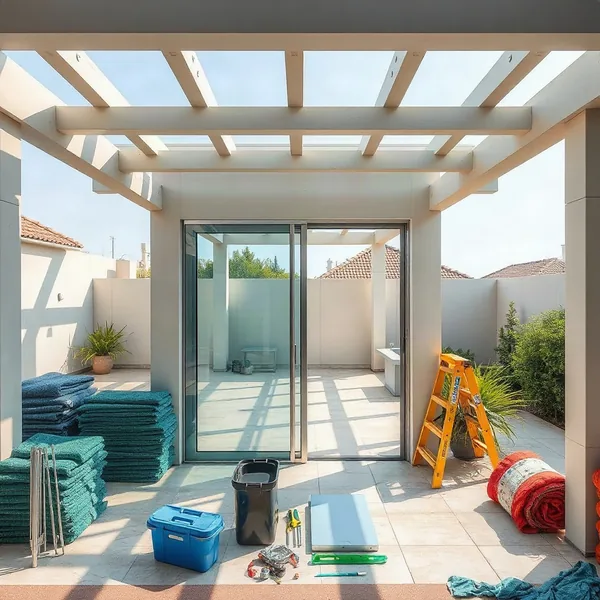
Shaded north-facing elevations on villa compounds, interior partitions within commercial buildings, and light-industrial units in Dubai's free zones are all appropriate applications. Covered pergola or gazebo annexes — where the structure is naturally ventilated rather than air-conditioned — are another common fit. The profile is also used in budget residential projects where windows face sheltered courtyards or internal corridors. Where the application involves an occupied, fully air-conditioned living space with south or west sun exposure, the specification is genuinely unsuitable: frame conductivity under Dubai's summer conditions will raise cooling demand and create condensation cycles that cause ongoing maintenance problems.