01
How Is a Wooden Gazebo Built From Foundation to Roof?
concrete footingpost anchorroof truss
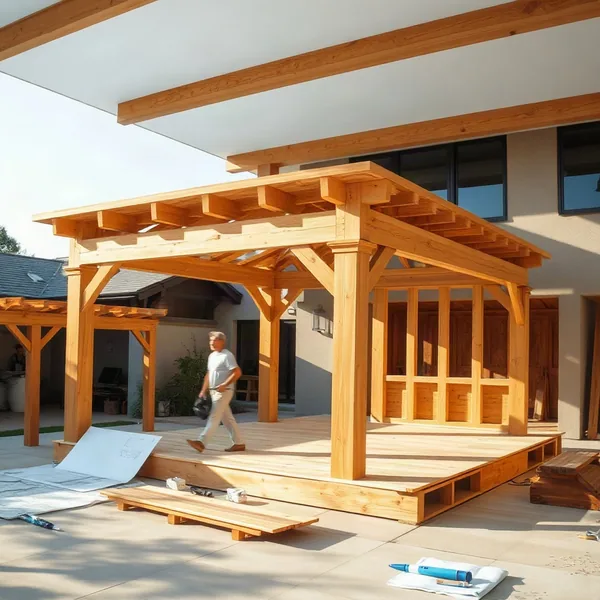
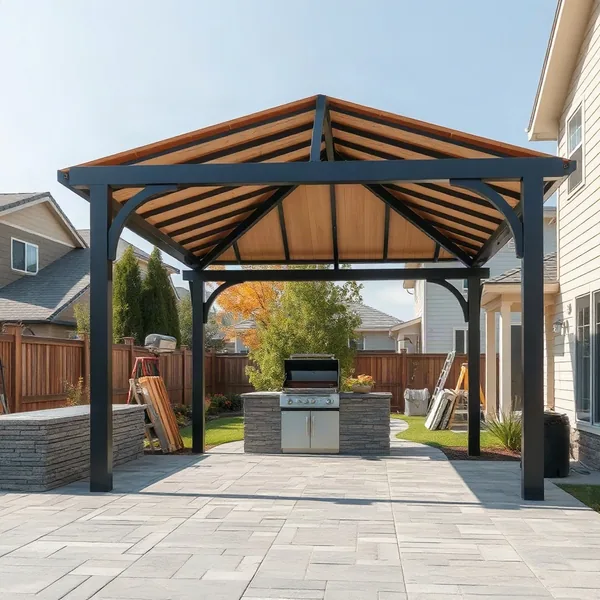
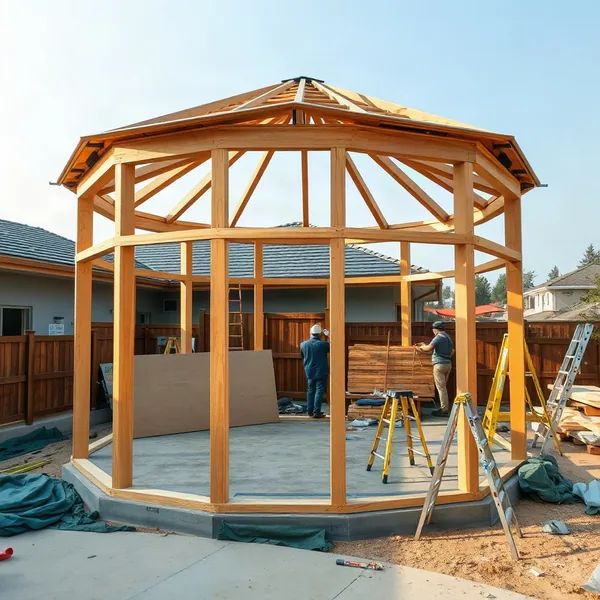
Wooden gazebo construction follows four distinct stages, and getting the sequence right in Dubai's conditions is non-negotiable.
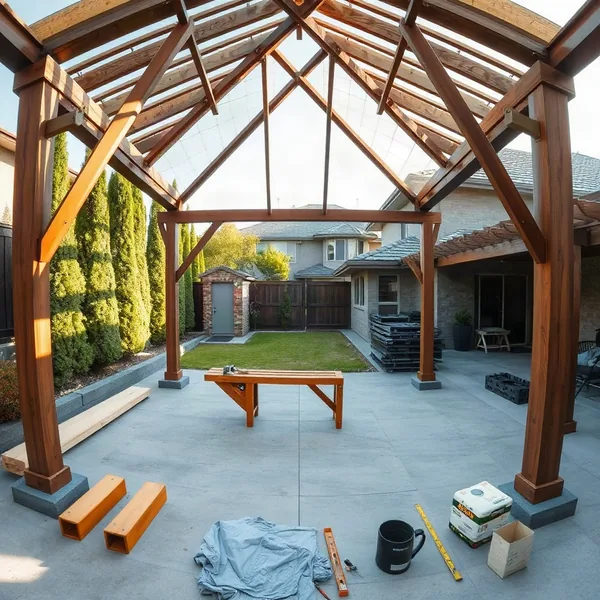
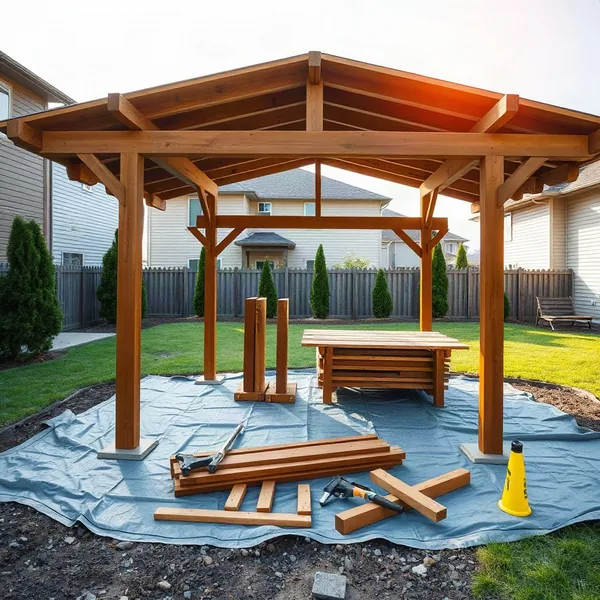
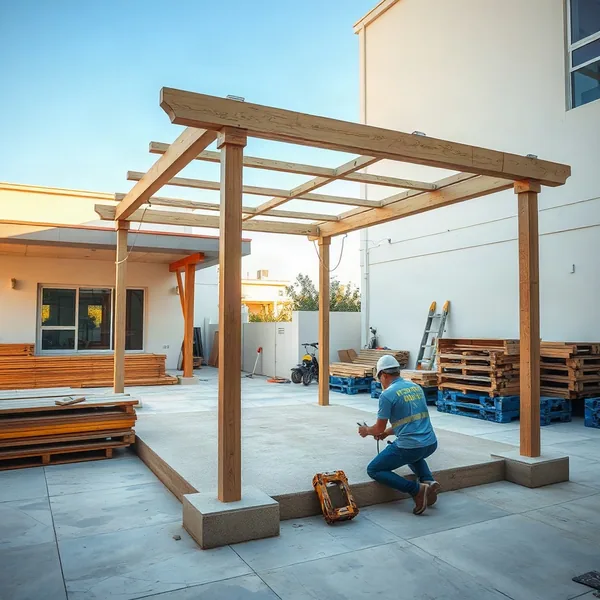
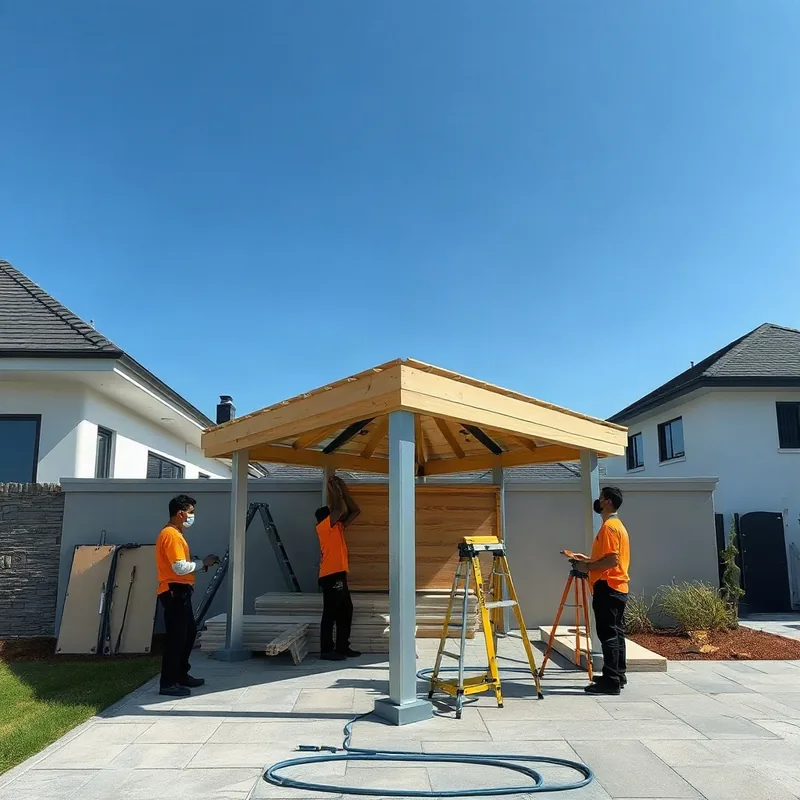
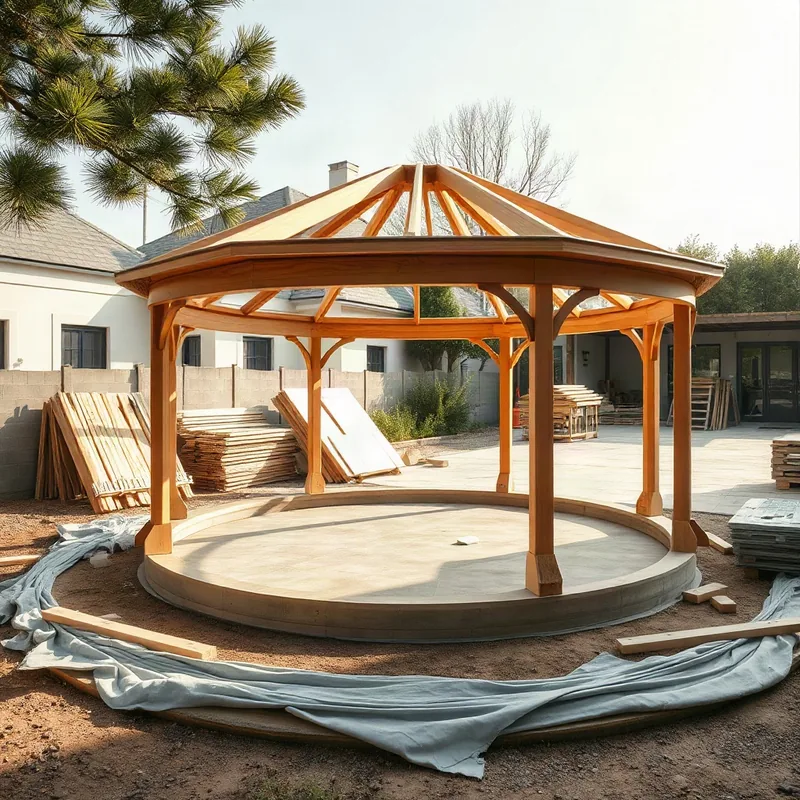
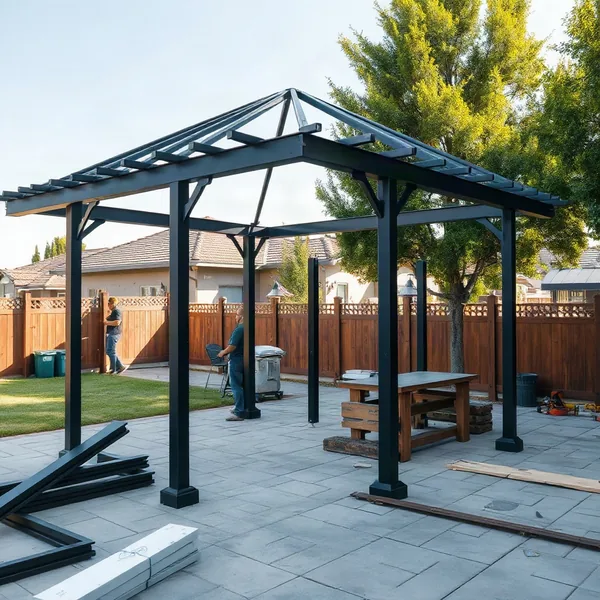
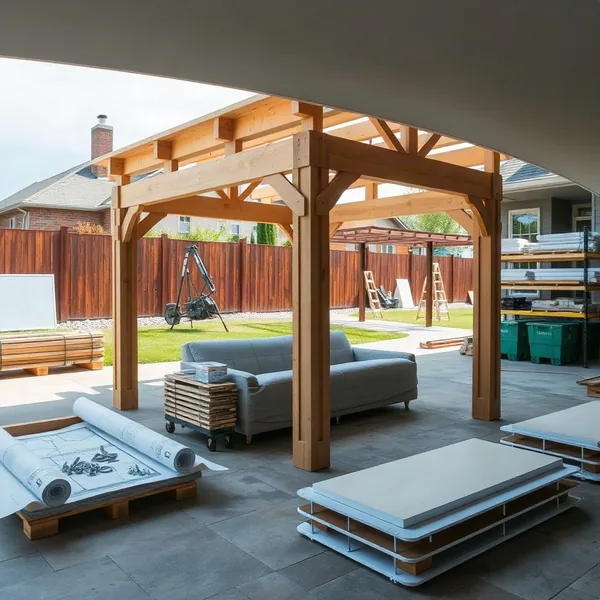
First, we excavate and pour an engineered concrete footing — typically 450 mm to 600 mm deep — sized for the actual post loads and the low bearing capacity of Dubai's sandy ground. Each post is set on a hot-dip galvanized post anchor embedded in that pad, isolating the timber from direct soil contact. Once the frame is plumb and bolted, the roof truss panels are lifted into position and fixed at ridge and eave. The whole wooden gazebo build is then sheeted, trimmed, and sealed before the finishing coat is applied. This staged process usually spans 10 to 20 working days on-site, excluding the permit phase.
02
How Much Does Wood Pergola or Gazebo Construction Cost?
timber gradelabour costfoundation type
Wood pergola cost in Dubai is driven by four variables: timber grade, overall footprint, foundation type, and site access.
A straightforward 4 m × 4 m freestanding structure in treated pine typically starts around AED 8,000 to AED 15,000. Step up to a 6 m × 5 m hardwood build with decorative joinery and engineered concrete pads, and the figure moves into the AED 25,000 to AED 60,000 range. Labour cost accounts for roughly 25 to 35 percent of the total, with material and foundation work making up the balance. Dubai's sabkha soil usually rules out basic ground anchors, which pushes foundation costs higher than comparable projects in other markets. Site access for delivery vehicles and crane-lift equipment can also add a line item on tight villa plots.
03
Is Cedar the Right Wood for Dubai's Climate?
cedar woodmoisture resistanceUV coating
Cedar wood for pergola and gazebo builds is a viable choice in Dubai, but it demands proper specification.
Cedar's natural oils give it solid moisture resistance and reasonable insect deterrence — useful during Dubai's summer humidity cycles that regularly climb above 90 percent. The real challenge is sustained heat above 45 °C combined with intense solar radiation, which dries and cracks cedar quickly if it's left untreated. Every cedar component we install receives a UV coating — a UV-stabilizing penetrating oil applied before erection — and we advise clients to re-treat the timber every 12 to 18 months. Hardwoods like teak or iroko outperform cedar in longevity here, but cedar remains competitive on cost when the maintenance schedule is followed. We'll recommend the right species during the site survey based on your budget and use pattern.
04
Following a Wooden Gazebo Plan: What to Expect
construction drawingjoinerypermit drawing
Working from wooden gazebo plans in Dubai means the design phase carries legal weight, not just aesthetic intent.
Before any timber is cut, we produce a full construction drawing package — structural calculations, footing details, and a permit drawing stamped by a licensed engineer — and submit it to Dubai Municipality for the required No Objection Certificate and building permit. This process alone typically adds 1 to 3 weeks to the overall timeline, so we begin it immediately after the client approves the concept. Joinery details — mortise-and-tenon connections, rafter spacing, ridge beam sizing — are resolved at drawing stage, not on-site. Clients who arrive with a sketch or inspiration image can expect approximately 5 to 7 working days to produce a compliant drawing set ready for submission.
05
Wooden Gazebo Construction Across Dubai Communities
villa gardenssite surveydelivery logistics
Our wooden gazebo Dubai installations cover the full emirate — from Arabian Ranches and The Springs to Jumeirah, Mirdif, Al Barsha, and Palm Jumeirah.
Most of Dubai's villa gardens sit behind compounds built between 2000 and 2015, and their rear-plot configurations are well suited to freestanding timber gazebos that don't require structural ties to the main building. We arrange a site survey within 2 to 3 business days of inquiry, using it to check plot boundaries, confirm soil conditions, and plan delivery logistics for timber and concrete materials. Delivery logistics matter here: some gated communities restrict heavy vehicle access to certain days, and we factor that into the programme before confirming a start date. No job is priced without an in-person visit.