01
What Residential Pergola Services Are Available?
installation scopeservice list
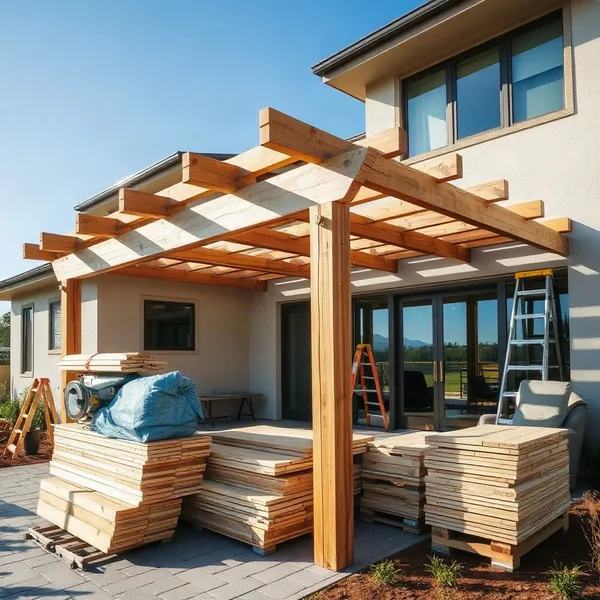
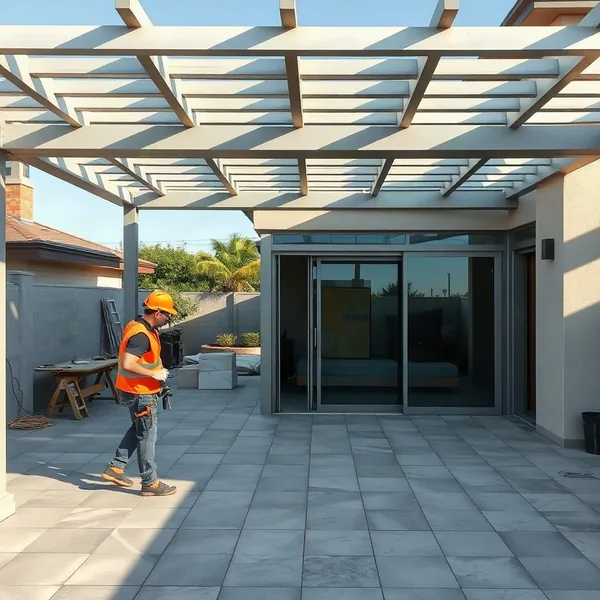
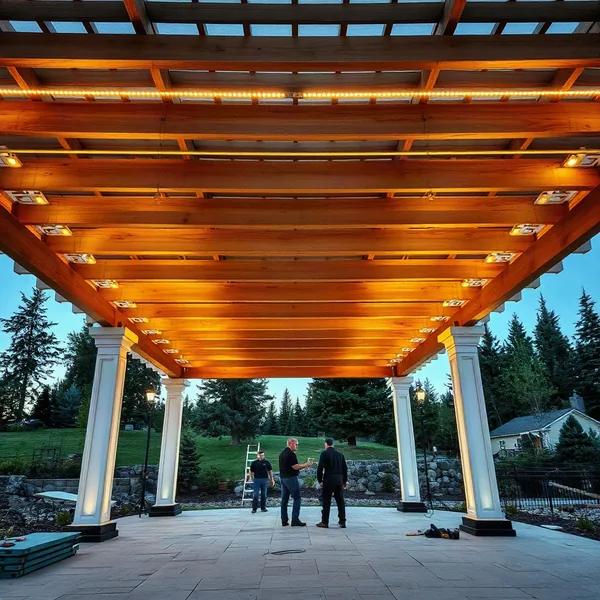
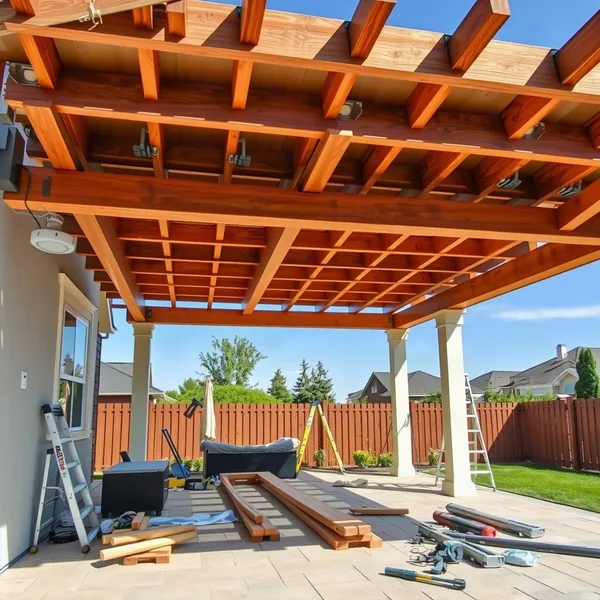
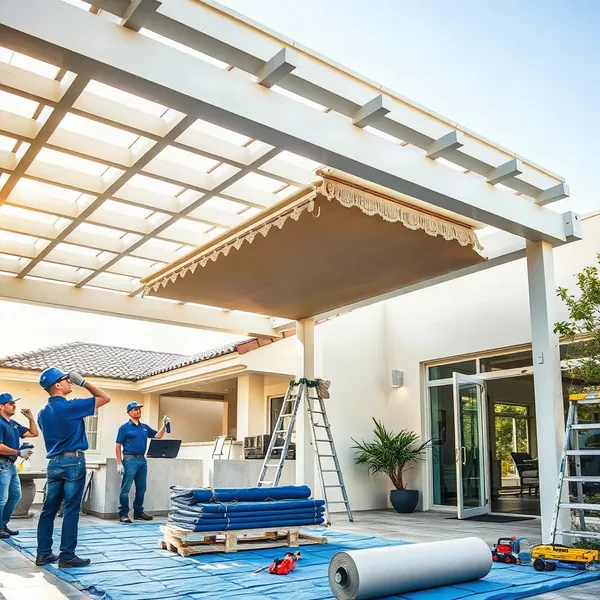
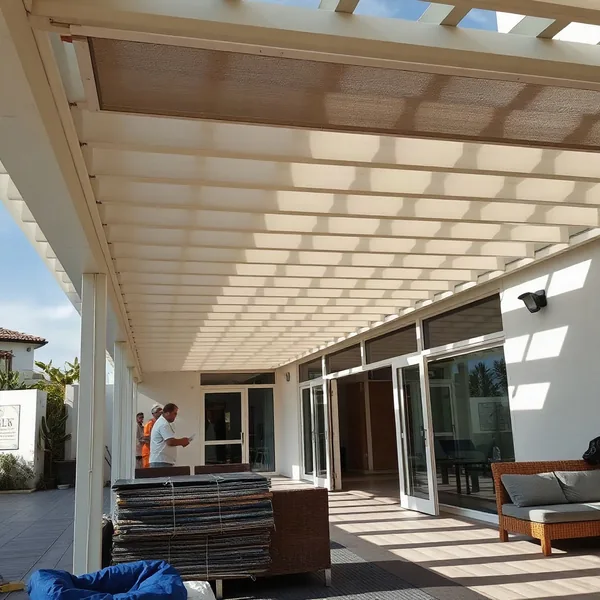
Our residential pergola installation service covers the full range of outdoor shade structures Dubai homeowners actually request: freestanding timber and aluminium frame pergolas, motorized louvered roof systems with rain sensors, polycarbonate and glass canopy structures, and retractable fabric canopies for smaller terraces. The installation scope extends to engineered concrete footing work — necessary because Dubai's sandy and sabkha soil has low bearing capacity — as well as post-Shamal cleaning inspections and hydrophobic nano-coating for any glazed panels. LED lighting integration, built-in drainage channels, and boundary-wall anchoring are all part of the standard service list, not extras quoted separately.
02
Do You Need a Permit to Install a Pergola in Dubai?
Dubai Municipalitybuilding approval
Yes — a building permit and No Objection Certificate issued by Dubai Municipality are mandatory before any fabrication begins.
This applies to every permanent garden structure attached to or freestanding within a residential property, including gazebos and glass canopy frames. The process requires stamped structural drawings prepared by a licensed engineering consultant, and those drawings must receive building approval before materials are ordered. In practice, that adds three to six weeks to a project's lead time. Skipping this step is not a viable shortcut; municipal inspectors do conduct site checks in villa communities, and unpermitted structures are subject to removal orders. We handle the permit submission process in-house.
03
Which Dubai Areas Are Covered for Pergola Installation?
villa communitiesservice radius
We carry out pergola installation Dubai-wide, covering the main villa communities where demand is highest: Arabian Ranches, The Springs, The Meadows, Jumeirah, Mirdif, Al Barsha, Dubai Hills Estate, Palm Jumeirah, and Damac Hills.
Our service radius spans the entire emirate, including newer townhouse clusters in Mohammed Bin Rashid City and Tilal Al Ghaf. Properties built between 2000 and 2015 — the largest share of Dubai's villa stock — typically feature rear garden and terrace layouts that suit freestanding pergola structures without requiring full structural tie-ins to the main building. If your community has an additional HOA approval layer on top of the municipal permit, we coordinate that too.
04
How Much Does Residential Pergola Installation Cost?
material choicesite size
Installation cost depends primarily on material choice and site size.
A basic aluminium-frame pergola with polycarbonate roofing for a 15–20 sqm garden starts from around AED 8,000. A motorized louvered system for a 30–50 sqm villa terrace typically runs AED 25,000 to AED 60,000, and premium glass-roofed structures can exceed AED 80,000. Site-specific factors that push costs up in Dubai include engineered footings for sabkha soil (requiring hot-dip galvanized or stainless below-grade components), scratch-resistant glazing to handle Shamal dust abrasion, and sealants rated for repeated condensation cycles. Permit and engineering drawing fees from Dubai Municipality and a licensed consultant add approximately AED 3,000 to AED 8,000 on top.
05
How Do You Choose the Right Pergola Type for Your Villa?
aluminium frametimber frame
The aluminium vs timber frame decision comes down to maintenance tolerance, aesthetics, and budget.
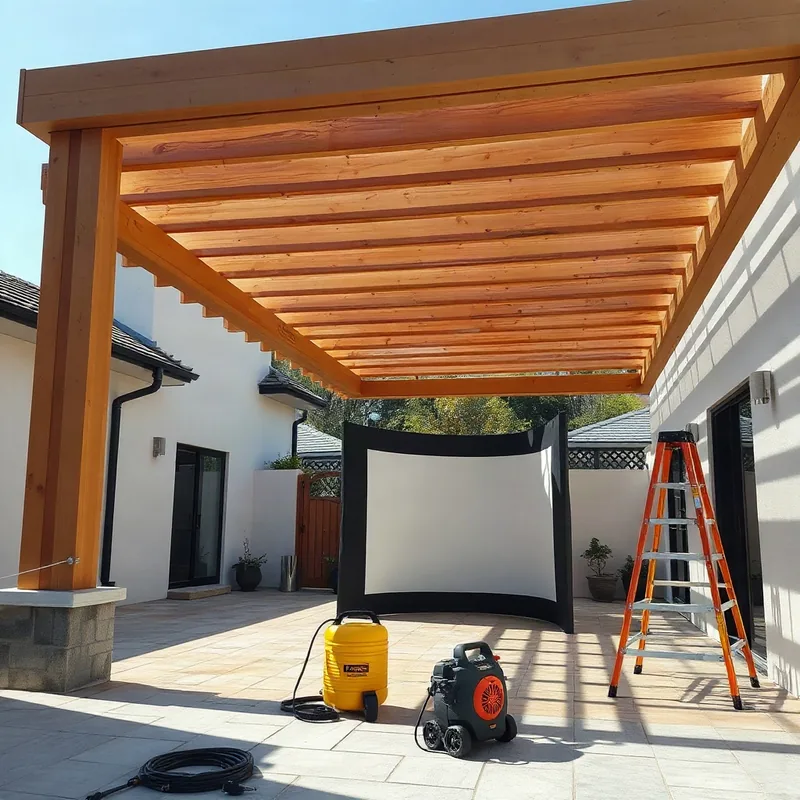
An aluminium frame resists Dubai's humidity spikes — which regularly push above 90 percent on summer mornings — without warping, and it handles thermal expansion at temperatures exceeding 45 °C far better than untreated wood. Powder-coated aluminium also sheds the mineral scale left by Dubai's high-TDS desalinated water with a simple rinse. A timber frame delivers a warmer visual finish preferred in landscape-heavy villa garden pergola settings, but requires pressure-treated hardwood, UV-resistant stain reapplied every two years, and stainless fixings throughout to resist the corrosive salt content in Dubai's shallow soil. We specify both; the right choice depends on your garden layout and upkeep preference.