01
Pergola Roof Replacement in Dubai's Extreme Heat
Roofing panels on a Dubai pergola face a punishing cycle: surface temperatures on exposed polycarbonate or glass can spike well above the already extreme 45 °C ambient summer air, then cool sharply overnight as humidity climbs past 90 percent. That repeated thermal expansion and condensation cycle delaminates cheaper panel grades within two or three seasons. When we carry out a pergola roof replacement, we specify UV-stable, twin-wall polycarbonate or tempered, scratch-resistant glass panels rated for Dubai's thermal stress — not the same sheet sold into European shade structures. Frame rebates are re-sealed with high-temperature silicone, and drainage channels are cleared of any silica sand packed in during Shamal wind events before the new roof goes on.
02
Pergola Fabric Replacement and Canopy Renewal
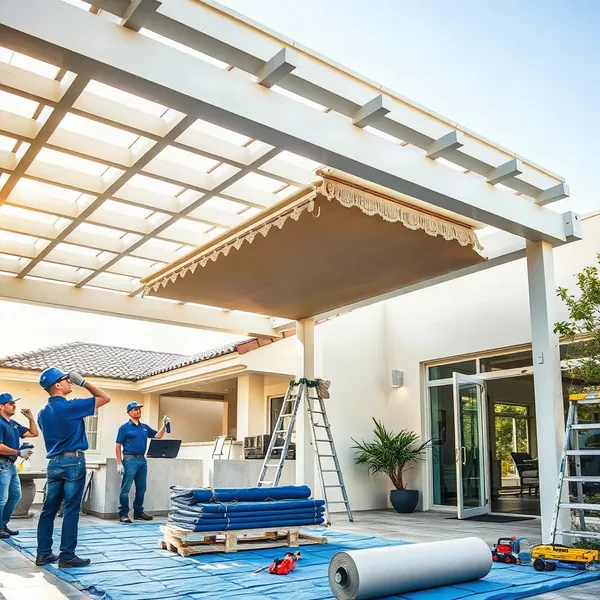
Pergola canopy fabric replacement is one of the most requested repairs we handle each spring, just before Dubai's summer heat peaks.
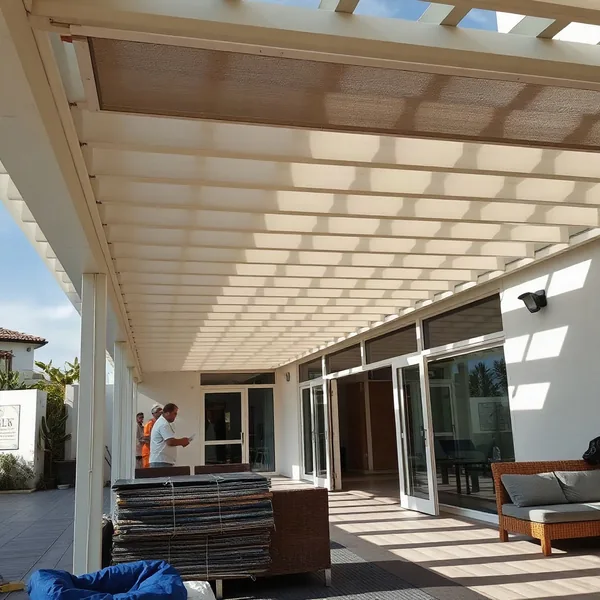
Most factory-fitted shade fabrics begin showing UV degradation — brittleness, colour fade, thread separation — after two to four years of continuous Dubai sun exposure. We stock high-density HDPE shade cloth and marine-grade solution-dyed acrylic in multiple opacity ratings so you can replace like-for-like or upgrade to a fabric that sheds Shamal dust more easily. Tensioning hardware is replaced at the same time, because the original fittings often show corrosion from the humidity cycles even when the fabric itself looks intact. Correct tensioning also prevents pooling, which accelerates mineral-scale staining from Dubai's hard desalinated water supply.
03
Gazebo Renovation: Structural Repairs and Cosmetic Upgrades
A gazebo renovation can range from re-powdercoating an oxidised frame to completely rebuilding the base footings when salt-bearing sabkha soil has corroded unprotected steel anchors below grade.
Dubai's soil across most villa and compound zones carries dissolved salts at shallow depths, so any below-grade steel component that was not originally hot-dip galvanised will show significant rust within five to seven years. Our assessment identifies whether corrosion is surface-level or has compromised structural integrity, and we replace affected sections with stainless or galvanised alternatives before the visible cosmetic work begins. Frame joints are re-welded or re-bolted, new powder coat is applied in the original colour or a customer-chosen shade, and the completed structure is re-inspected before handover.
04
Wood Pergola Maintenance and Material Assessment
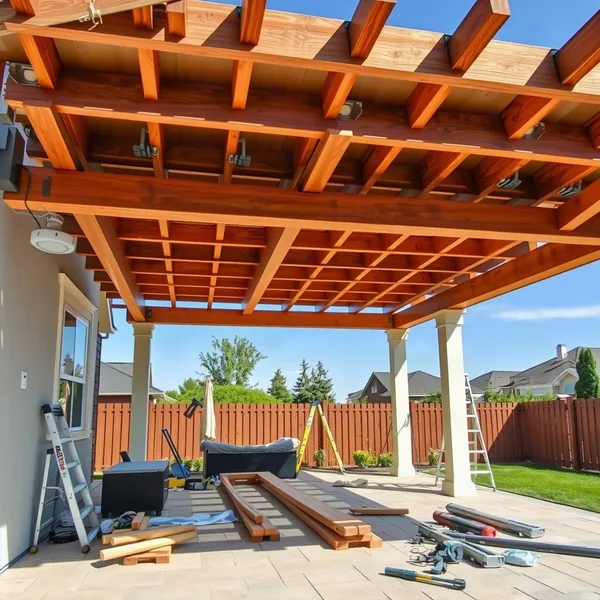
Wood pergola maintenance in Dubai is demanding because no timber species handles a prolonged summer at 45 °C combined with near-daily condensation cycles without deliberate upkeep.
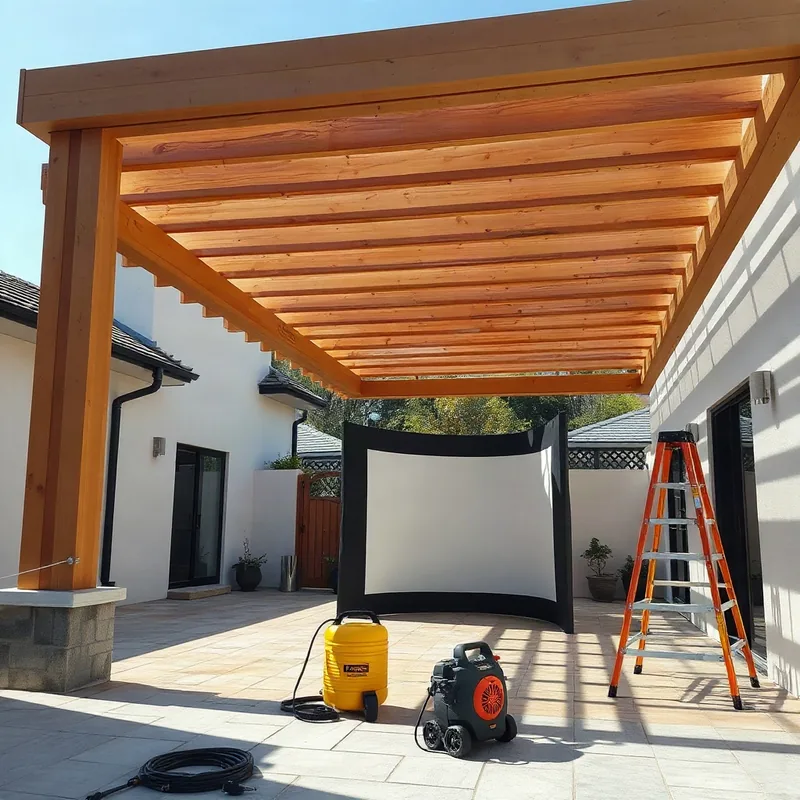
Hardwoods like teak and iroko hold up better than pine or cedar, but all require re-oiling or re-staining every 12 to 18 months to prevent surface cracking and joint separation. We assess every exposed mortise, tenon, and bolt pocket for moisture ingress, replace corroded stainless fixings, and treat endgrain surfaces — the most vulnerable points — with penetrating oil before a protective topcoat is applied. For clients considering a pergola renovation that changes the material entirely, we can propose an aluminum-frame conversion that retains the visual character of the original timber design but eliminates the ongoing wood maintenance schedule.
05
Ongoing Pergola Maintenance: What Dubai's Climate Demands
Routine pergola maintenance in Dubai follows a different calendar than almost anywhere else.
The two highest-priority windows are pre-summer (April–May) and post-Shamal (June–July). Pre-summer, sealants and fabric tensioning are checked before ambient temperatures make access uncomfortable and before peak UV exposure arrives. Post-Shamal, we clean abrasive silica dust from glass and coated panels using a soft rinse-first method — dry wiping abrasive dust across coated aluminum or glass is one of the fastest ways to introduce permanent surface scratches. Glass surfaces on glazed pergola roofs also benefit from a monthly descaling treatment; Dubai's municipal water supply from DEWA carries 500–700 mg/L of dissolved solids, and scale deposits that are allowed to etch into uncoated glass are difficult to reverse without professional polishing.
06
Permits and Engineering for Pergola Installation in Dubai
Every structural addition to a Dubai residential or commercial property — including freestanding pergolas on villa gardens — requires a No Objection Certificate and a building permit issued by Dubai Municipality before fabrication begins.
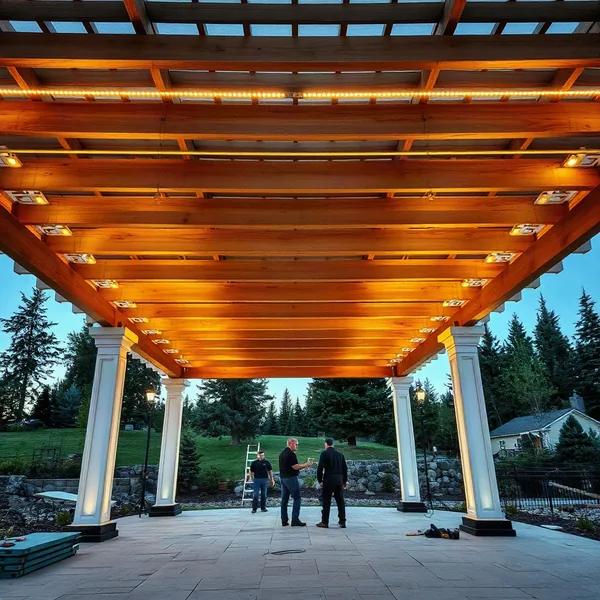
We coordinate that submission process with licensed engineering consultants who produce stamped structural drawings, which are a mandatory part of the application. The permit stage typically adds two to four weeks to a project timeline, so clients who engage us early can begin material selection and design decisions while the application is in the queue rather than waiting until approval arrives. Freestanding garden pergolas, which are common across the townhouse and villa compound stock built between 2000 and 2015, often qualify for a more straightforward permit track than structures attached directly to a building's façade.
07
Choosing a Pergola Installation Service in Dubai
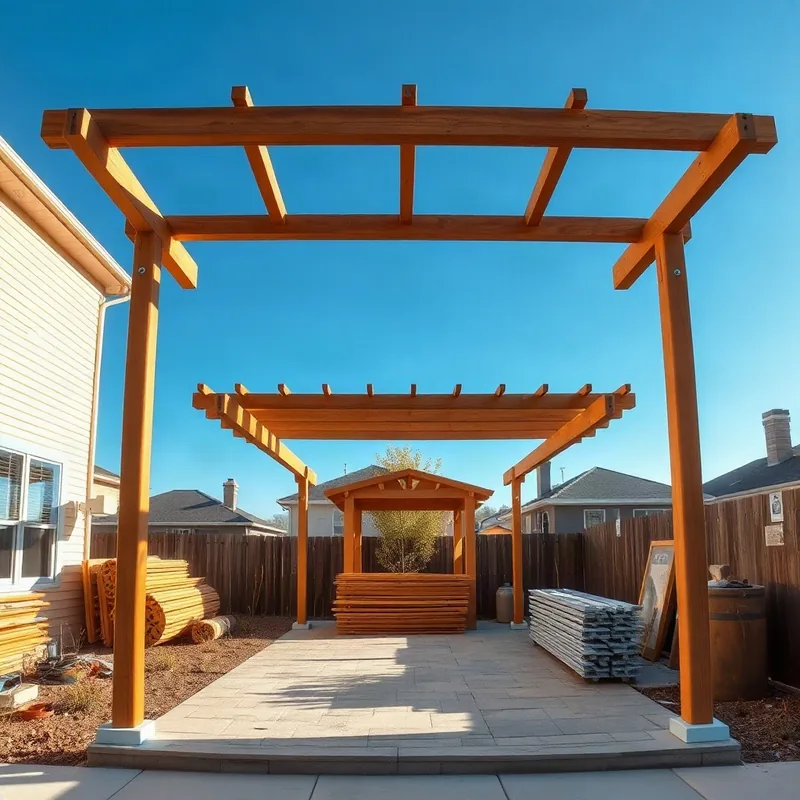
Selecting a pergola installation service here requires checking three things beyond price: whether the contractor handles Dubai Municipality permit submissions, whether their specified materials are rated for extreme thermal and humidity cycling, and whether their anchor systems account for the low-bearing, salt-bearing sabkha soil common across Dubai's villa zones. Freestanding pergola structures covering 20–30 square metres need engineered concrete pads or helical anchors — not the shallow footings that would be acceptable on stable clay or loam soil elsewhere. We survey soil conditions as part of every site assessment and specify footing depth and reinforcement before quoting, so structural drawings submitted to the municipality reflect actual ground conditions rather than assumed standard profiles.