01
Glass Balustrade Systems: Frameless, Semi-Frameless, and Framed Options
A glass balustrade can be installed in three structural configurations, and the right choice depends on your balcony depth, fixing substrate, and visual preference.
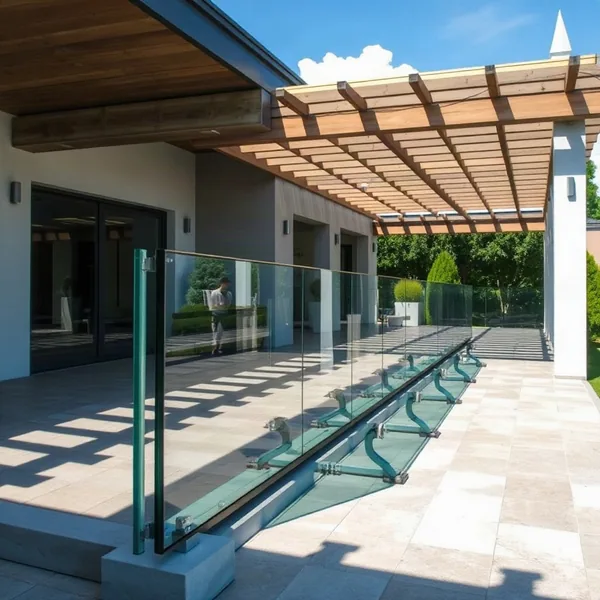
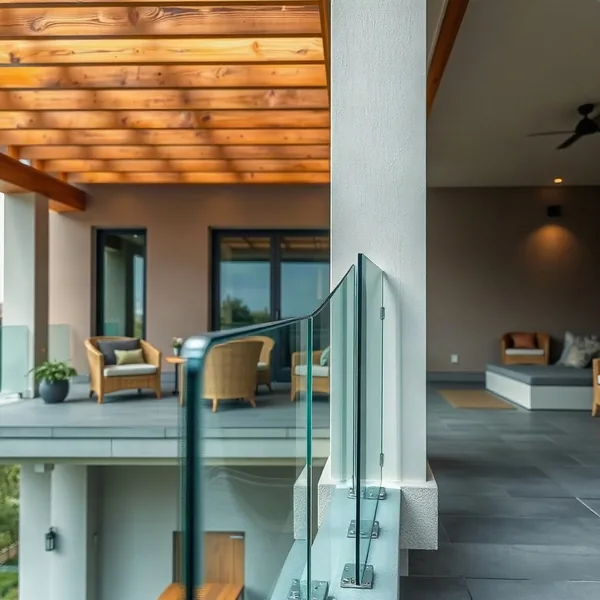
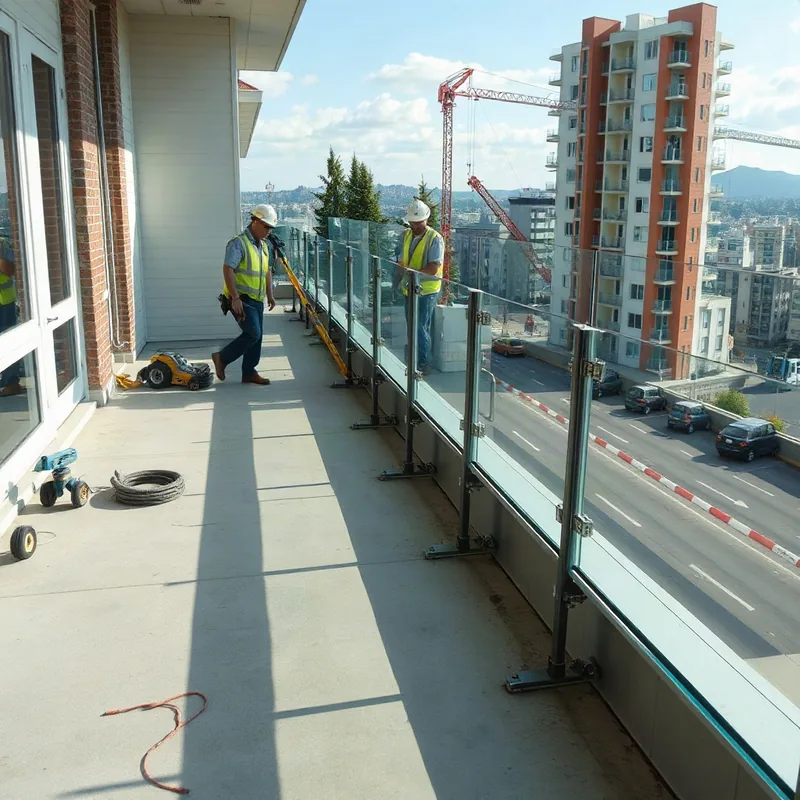
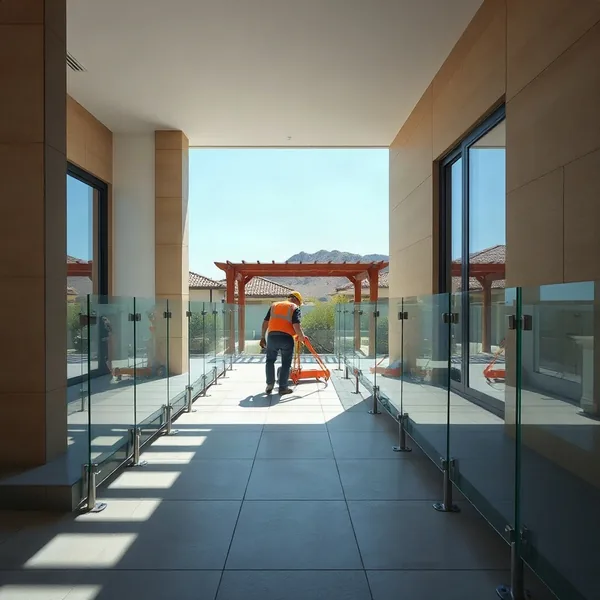
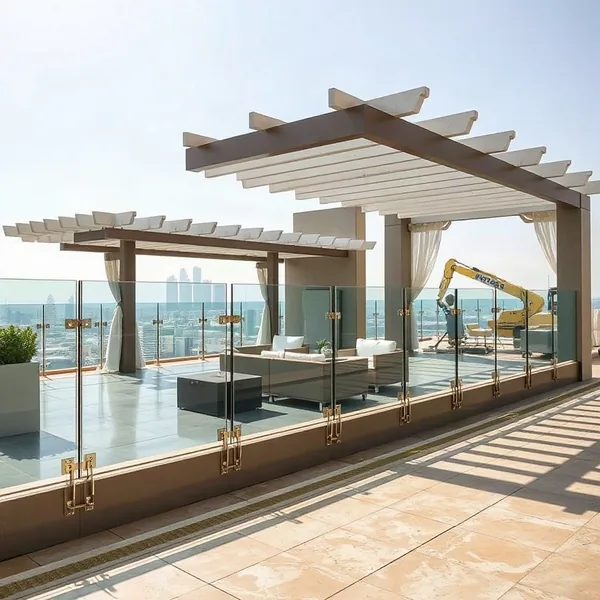
Frameless systems use a continuous floor-mounted aluminium or stainless channel, or discrete point-fixed spiders, to carry 15–17.52 mm tempered or laminated panels with no visible vertical posts — the cleanest result for pool decks and upper-floor terraces. Semi-frameless designs add slimline stainless posts at 1.0–1.2 m centres, allowing thinner 12 mm glass and reducing cost without sacrificing much sightline. Fully framed aluminium systems suit high-traffic commercial balconies where robustness outweighs aesthetics. All three configurations are available with clear, low-iron, tinted, or frosted glass.
02
Handrail for Balcony: Material and Profile Choices
The handrail for a balcony railing system carries daily contact loads and must withstand Dubai's 90 %+ peak humidity without corroding.
We fabricate handrails in three primary materials: brushed or mirror-polished grade 316 stainless steel tube (the most corrosion-resistant option for coastal Dubai locations), powder-coated aluminium flat-bar or round profiles, and structural laminated glass cap rails for a completely post-free visual effect. Stainless tube diameters typically run 38.1 mm or 50.8 mm depending on span and load requirement. Aluminium profiles are lighter and suit long continuous runs on villa perimeter balconies. Glass cap rails are used almost exclusively on frameless systems where the top edge of the panel is routed and polished to serve as the gripping surface.
03
Glass Railing Design for Stairs and Internal Staircases
Staircase glass design follows different geometry rules than flat balcony runs.
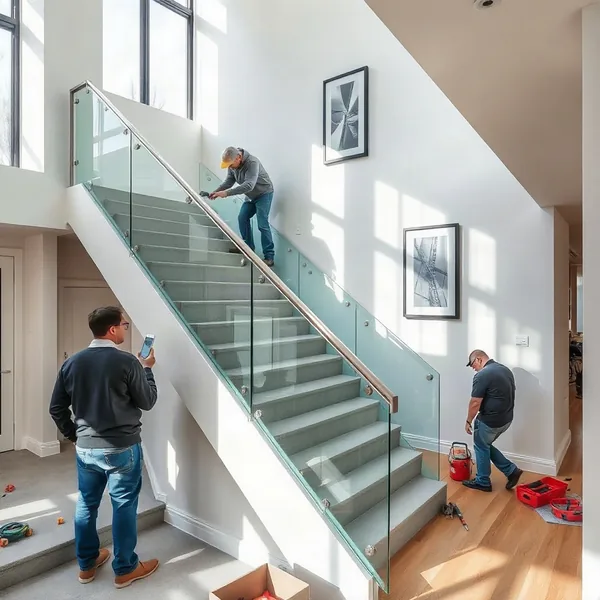
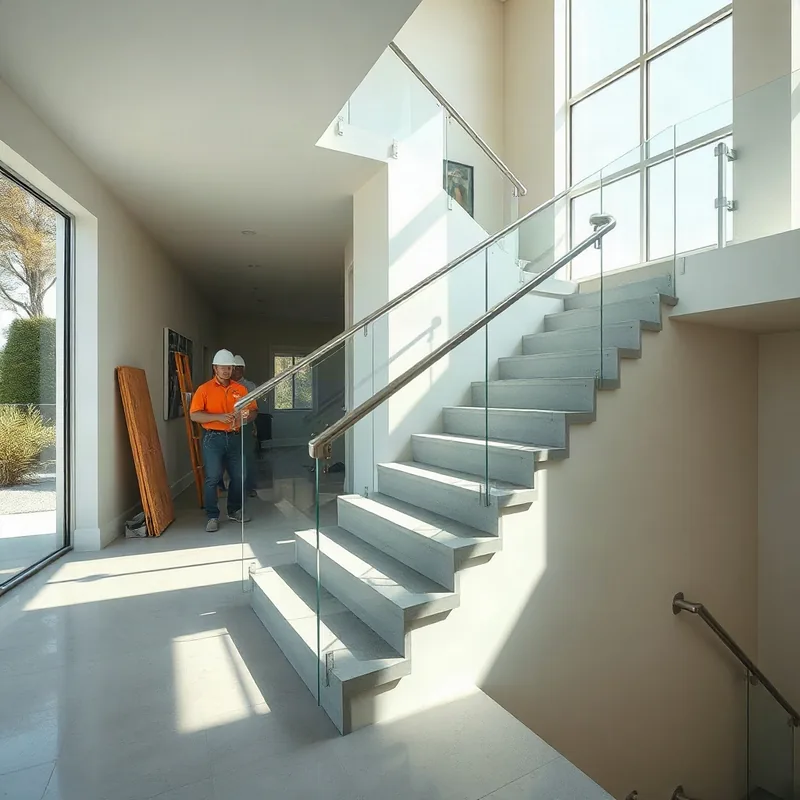
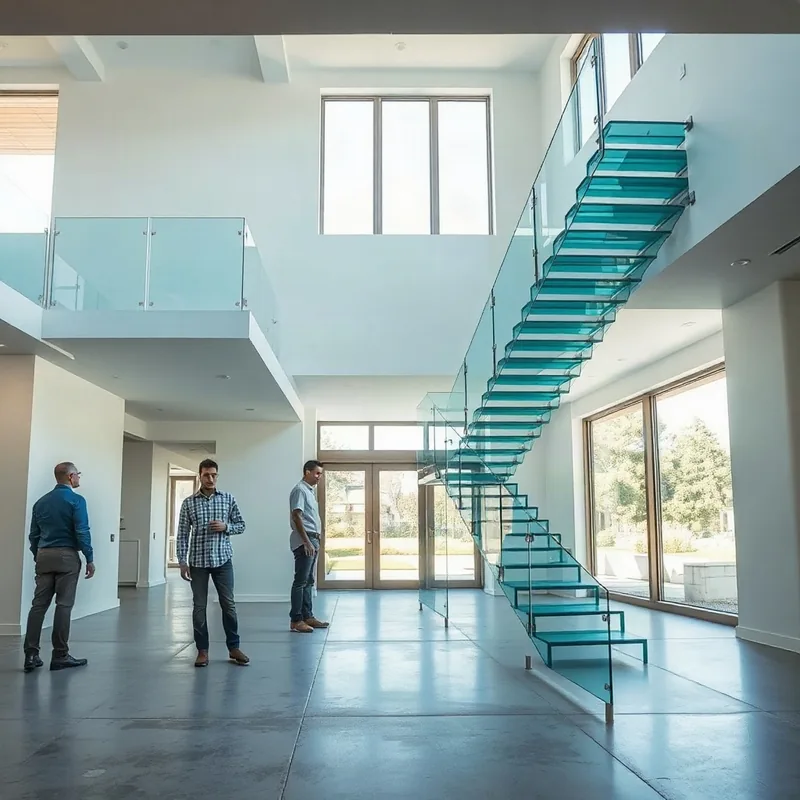
Panels must be raked to match the stair pitch — typically between 30° and 40° in Dubai villa builds — which means each panel is a custom trapezoid rather than a rectangle, adding cutting and tempering time. Our staircase balustrade installations use 12 mm fully tempered or 8+8 mm laminated panels set into a continuous pitched floor channel or attached to the stair stringer via side-fix brackets. Glass railing design for stairs in double-height villa lobbies often combines a raked stair run with a flat landing section, requiring a transition post or a carefully mitred channel junction. We produce shop drawings showing every panel dimension before glass is ordered, eliminating fit issues on site.
04
Material Specification for Dubai's Climate: Heat, Humidity, and Shamal Dust
Dubai's ambient summer temperatures regularly exceed 45 °C, and exposed glass surfaces reach higher still, cycling through significant thermal expansion every day.
Standard temperate-climate sealants harden and crack under these conditions; we use silicone rated to at least 200 °C and aluminium alloys with expansion coefficients matched to the glass panel. Grade 316 stainless hardware resists the humidity spikes above 90 % that occur on summer nights and mornings. Shamal wind events between May and July carry abrasive silica particulate that micro-scratches uncoated glass surfaces over successive seasons; we specify scratch-resistant tempered glass and apply a hydrophobic nano-coating at installation. That same nano-coating reduces mineral scale build-up from Dubai's desalinated water supply, which carries 500–700 mg/L of total dissolved solids according to Dubai Electricity and Water Authority data.
05
Permits and Structural Requirements Under Dubai Municipality Rules
Any railing or balustrade system structurally attached to a Dubai building — whether through slab anchors, wall brackets, or core-drilled fixings — requires a No Objection Certificate and building permit issued through Dubai Municipality before fabrication begins. This applies to both residential villas and commercial properties. The process requires approved structural drawings stamped by a licensed engineering consultant, which typically adds two to four weeks to the project timeline. Emirates Pergola & Glass Works manages this coordination in-house, liaising with the consultant and submitting the permit package so clients avoid delays caused by incomplete documentation. Freestanding glass pool fence panels not anchored to the building may carry different requirements, but we advise confirming with Dubai Municipality's Building Department before any installation proceeds.
06
Villa Terrace and Pool Deck Balustrading: Common Dubai Applications
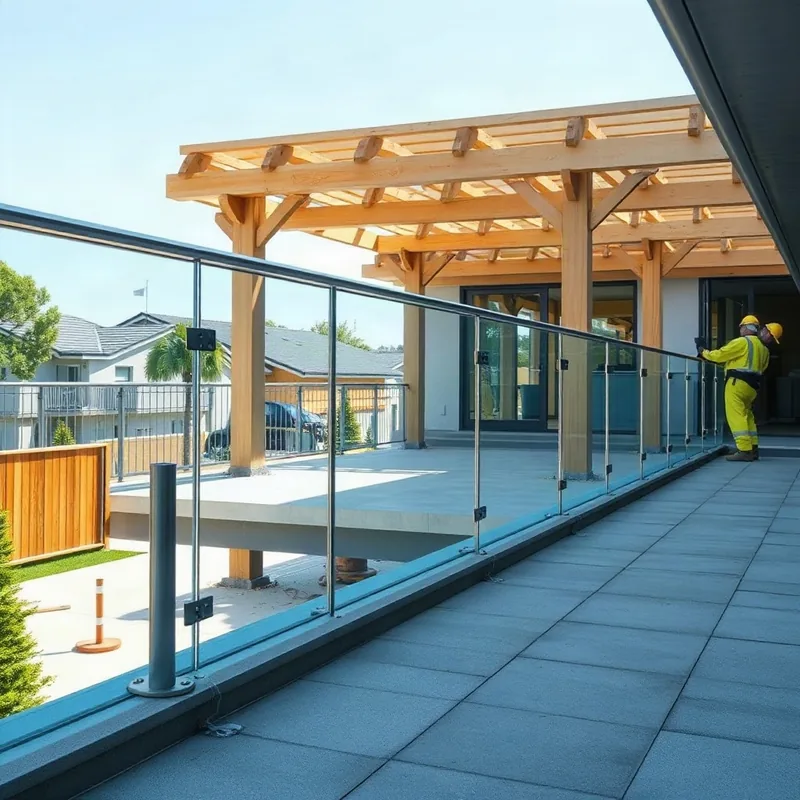
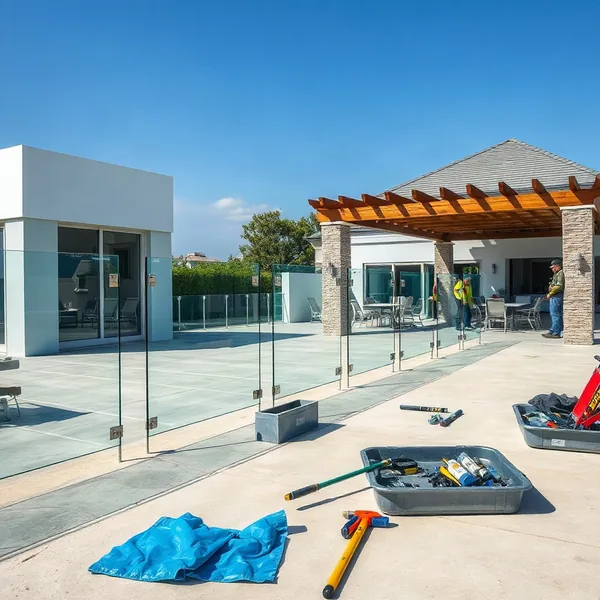
A large share of Dubai's residential stock consists of villa compounds and townhouse clusters built between 2000 and 2015, most featuring rear garden areas and flat-roofed or lightweight terraces well suited to glass pool fencing and perimeter balconies. Frameless glass pool fencing on these properties typically runs 15–30 linear metres, combining 1,000–1,200 mm panel heights with a stainless cap rail or top-edge polish finish. Where garden-level footings are required, Dubai's fine aeolian sand and sabkha soil — salt-bearing ground with low bearing capacity — means anchor posts must be set into engineered concrete pads, and any below-grade steel components must be hot-dip galvanised or stainless to resist sabkha-induced corrosion. This is not a detail we leave to chance; footing design is included in the structural drawings submitted for permit approval.
07
Maintenance and Long-Term Care for Glass Balcony Systems
A properly specified glass balcony system in Dubai needs straightforward but consistent maintenance.
After Shamal events, rinse panels with fresh water before wiping — dragging dry grit across the surface causes the micro-scratches that accumulate into visible dulling over years. Dubai's hard desalinated water deposits mineral scale quickly on untreated glass; a hydrophobic nano-coating applied at installation slows this significantly, but re-application every 12–18 months is recommended for surfaces with high hose or rain exposure. Check stainless hardware for any white salt blooming at slab interfaces annually — grade 316 resists it but high-humidity coastal zones can accelerate surface oxidation on scratched fixings. Aluminium channel sections should have their drainage weep holes cleared each season to prevent standing water, which accelerates sealant fatigue.