01
What Triple Glazed Sliding Doors Actually Do in a Dubai Home
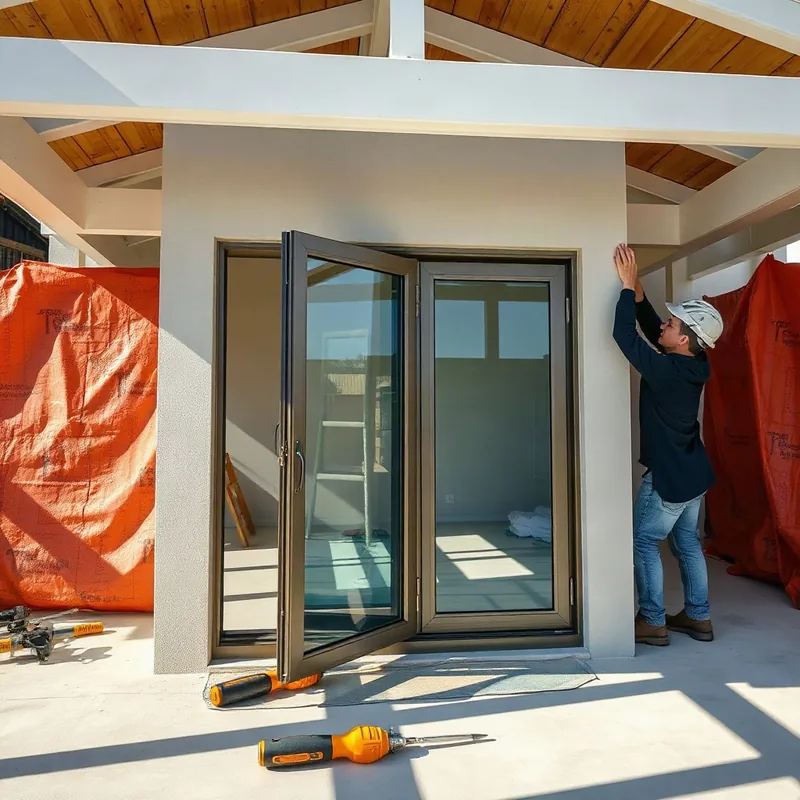
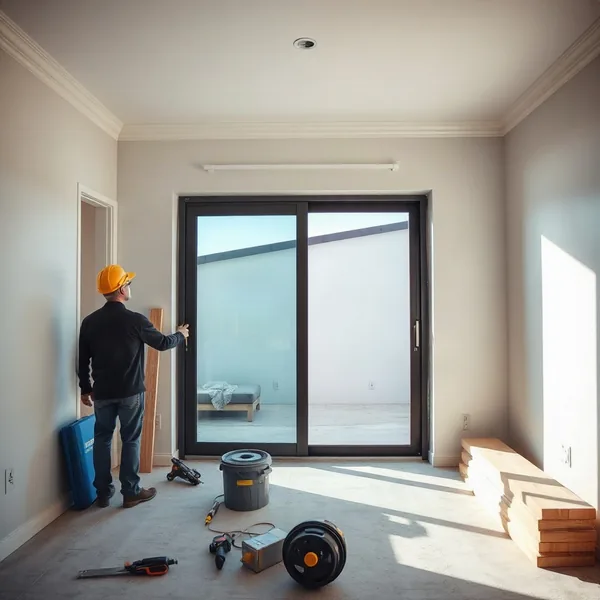
A triple glazed sliding door is a panel system built around a sealed glass unit containing three panes separated by two insulating air or argon-filled cavities, mounted in a thermally broken aluminum frame that slides on a floor-level track.
In practical terms for a Dubai villa, that construction cuts solar heat gain by a measurable margin — we specify units with a solar heat gain coefficient below 0.25 — keeping interior temperatures lower without forcing air conditioning to compensate. The sliding mechanism also avoids the wind-load stress that hinged doors face during Shamal events between May and July, when gusts carry abrasive silica dust across exposed facades.
02
Glass Specification for Dubai's 45 °C Summers and Shamal Dust
Surface temperatures on south- and west-facing glass in Dubai regularly exceed the ambient air reading by 15–20 °C during peak summer months, which means a glass unit specified for a temperate European market will thermally stress and delaminate its edge seals within two or three seasons. Every triple glazed unit we install carries a low-E coating on the inner cavity face to reflect infrared radiation back before it converts to interior heat. The outer pane is tempered to at least 6 mm, with a hardness-rated scratch-resistant surface that survives post-Shamal cleaning without micro-abrasion damage. Frame corner joints are sealed with silicone rated to –20 °C to +80 °C to handle Dubai's full thermal cycle.
03
Thermally Broken Frames and Sealants That Won't Fail in Dubai Heat
A thermally broken aluminum profile sandwiches a polyamide strip between the inner and outer frame sections, interrupting the metal-to-metal heat path that would otherwise conduct exterior heat directly into the room.
We source frame alloy in 6063-T5 temper, which maintains dimensional stability under repeated thermal expansion cycles. Sealants used at the perimeter — both structural silicone at the wall interface and warm-edge spacers within the glass unit — are specified at a minimum service rating of 75 °C continuous, not the 55 °C ceiling found on standard temperate-market products. This matters because Dubai's summer ambient temperatures regularly exceed 45 °C, and a metal frame in direct sun climbs considerably higher than that.
04
Hard Water, Nano-Coating, and Dubai's DEWA Supply Reality
Dubai's desalinated municipal water supply carries total dissolved solids typically in the 500–700 mg/L range, as measured by Dubai Electricity and Water Authority data.
Every time that water contacts glass and evaporates — through condensation cycles, rain, or routine cleaning — it leaves a mineral residue that progressively etches into untreated glass surfaces. We apply a hydrophobic nano-coating to all exterior-facing panes at the time of installation, reducing mineral adhesion so that routine wiping removes deposits rather than smearing them. Clients should plan for re-application every 18–24 months depending on sun exposure and cleaning frequency, and we provide a written descaling guide for the interim period.
05
Dubai Municipality Permits Before Fabrication Begins
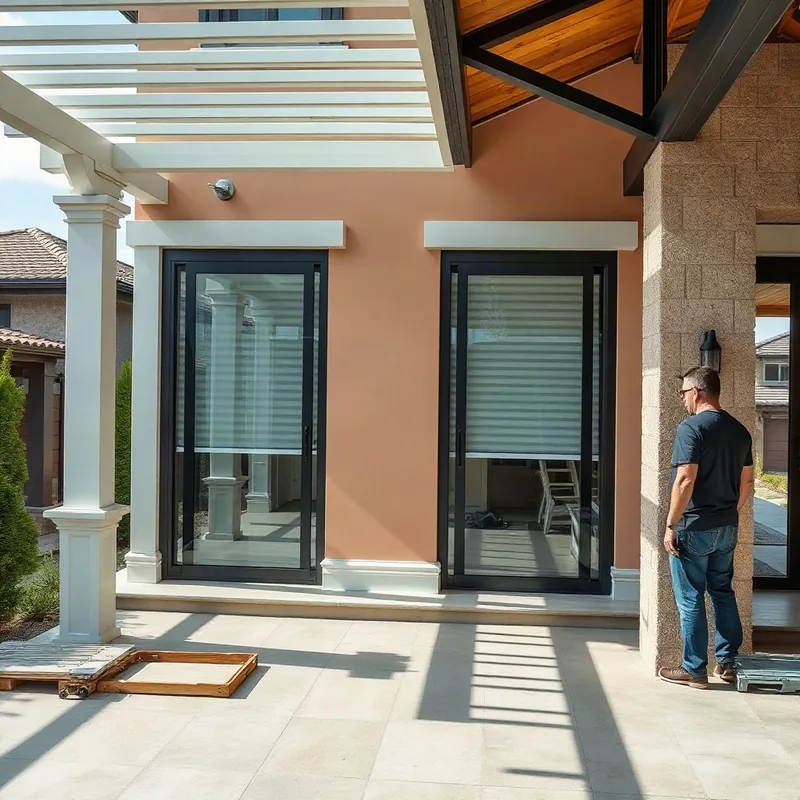
Attaching or modifying a sliding door opening on a villa boundary or load-bearing wall in Dubai qualifies as a structural addition under Dubai Municipality regulations, which means a No Objection Certificate and building permit are legally required before any fabrication starts. The permit process involves submitting stamped engineering drawings prepared by a licensed consultant, and realistically adds two to six weeks to the overall project timeline depending on queue times at the Building Department. Emirates Pergola & Glass Works coordinates this documentation phase on behalf of clients, so fabrication work in our workshop proceeds in parallel with approval — we do not begin cutting aluminum until the permit reference number is confirmed.
06
Track Systems and Hardware for Dubai's Villa Terrace Configurations
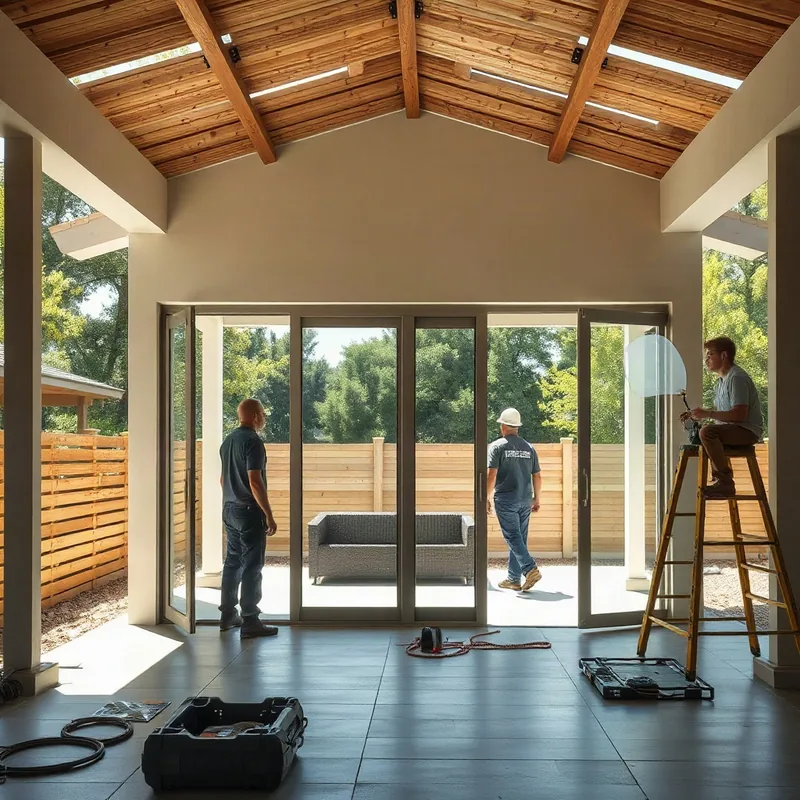
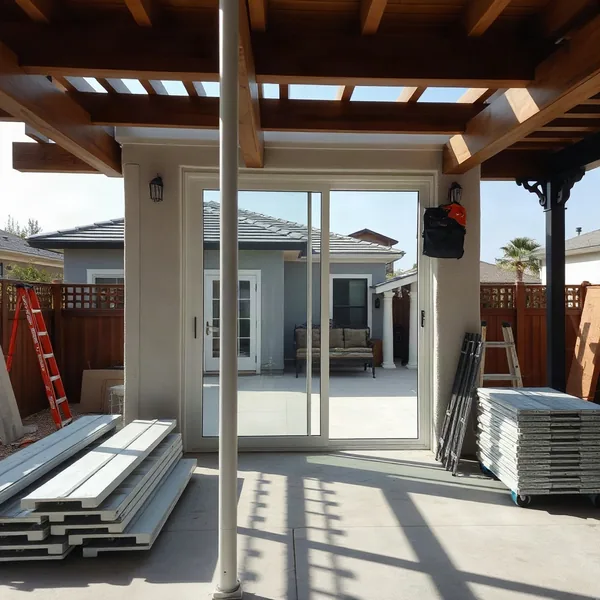
Most of Dubai's villa stock — built between 2000 and 2015 across communities like Arabian Ranches, Jumeirah Park, and similar clusters — features rear terraces connected to living areas through relatively wide openings of 3 m to 4.5 m.
At those spans, a triple glazed sliding door unit needs a bottom track rated for panel weights above 120 kg per leaf, with stainless steel roller carriages rather than zinc-alloy alternatives that corrode under Dubai's high-humidity condensation cycles. We use a flush-floor track profile wherever the sill allows, eliminating the trip hazard and simplifying cleaning. Multipoint locking hardware is standard; we do not install single-point latches on panels wider than 1.2 m.
07
Condensation Management Across Dubai's Humidity Spikes
Relative humidity in Dubai regularly rises above 90 percent during summer nights and early mornings, which creates sharp condensation cycles on any glass surface cooler than the dew point.
A triple glazed unit's interior pane stays significantly warmer than a single or double glazed equivalent, reducing the frequency and severity of interior condensation — but the external pane will still collect surface moisture on humid mornings. The warm-edge spacer bar we use inside the sealed unit keeps the edge zone of the inner pane above the condensation threshold for most of the year. Frame drainage channels at the sill are sized to clear 25 mm/hour rainfall without backing up, which covers Dubai's occasional short-duration downpours.