01
Wood and Aluminum Pergola Materials for Dubai Conditions
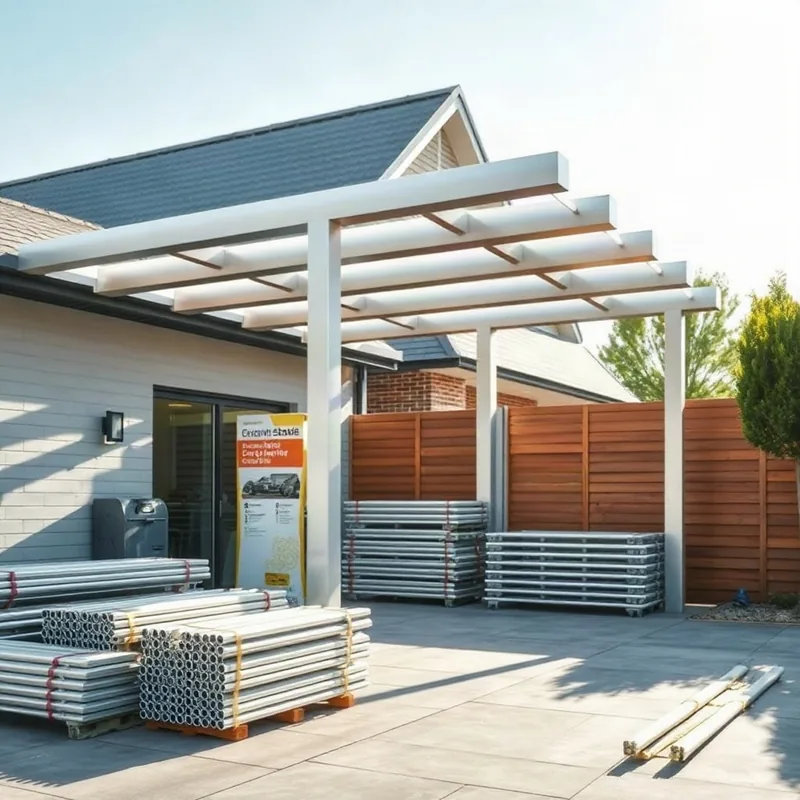
The two mainstream frame choices — timber and aluminum — perform very differently once Dubai's summer arrives.
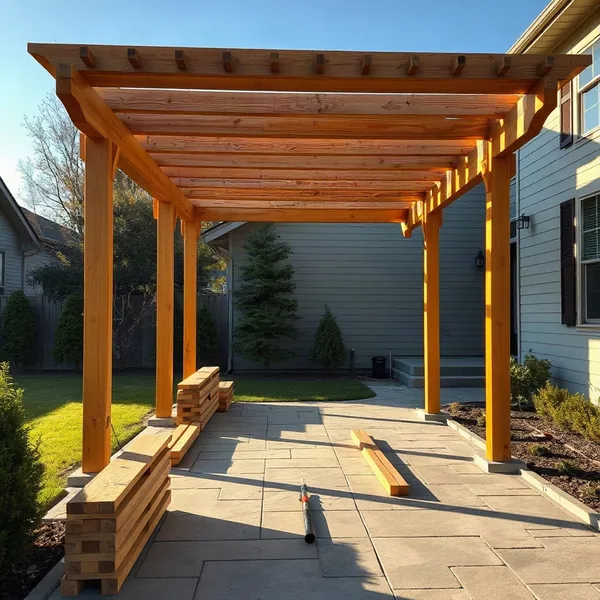
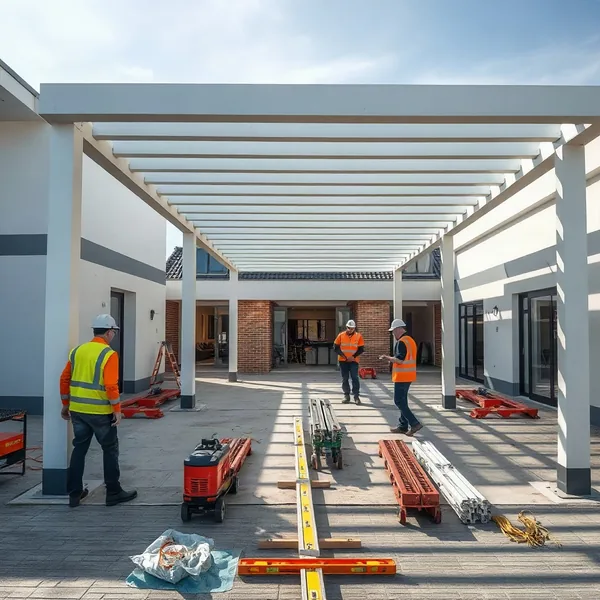
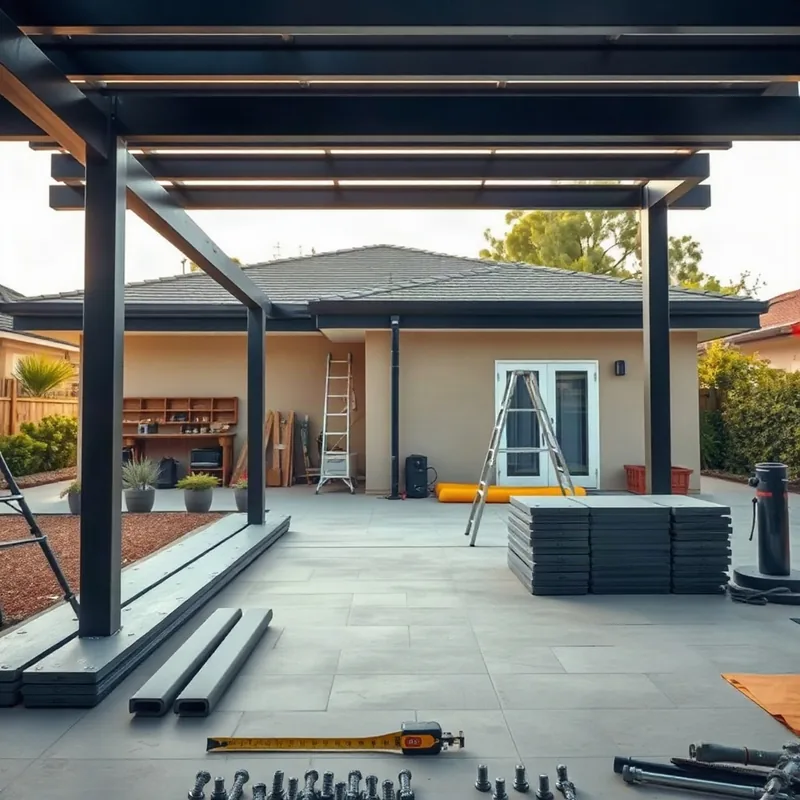
Engineered hardwood timber works well in shaded or partially enclosed settings and suits clients after a warm, natural aesthetic; it needs a UV-stable sealant reapplied every 12 to 18 months to resist the thermal stress that ambient temperatures above 45 °C place on surface coatings. Aluminum pergola designs dominate open-garden and poolside installations because powder-coated alloy frames handle thermal expansion without warping and need almost no periodic refinishing. For either material, frame joints and below-grade anchor points must use stainless or hot-dip galvanized fixings — Dubai's sabkha soil carries salt concentrations that corrode unprotected steel within two to three seasons.
02
Roofing Options: Slatted, Louvered, and Glazed Panels
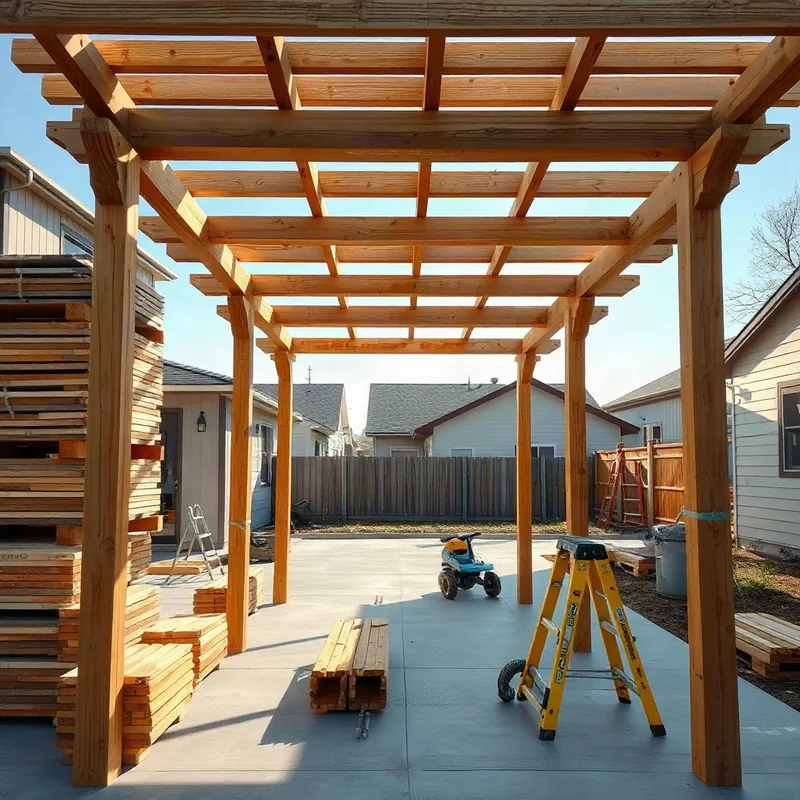
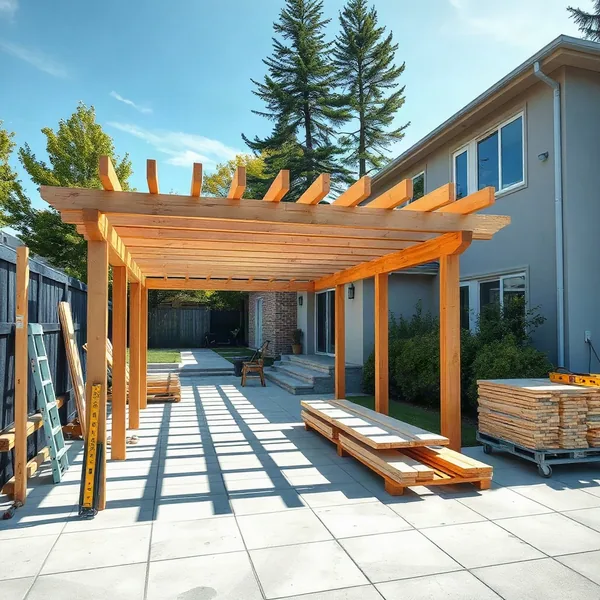
A wooden pergola with slatted roof is the most requested design for villa gardens because it balances shade and airflow without fully enclosing the outdoor space.
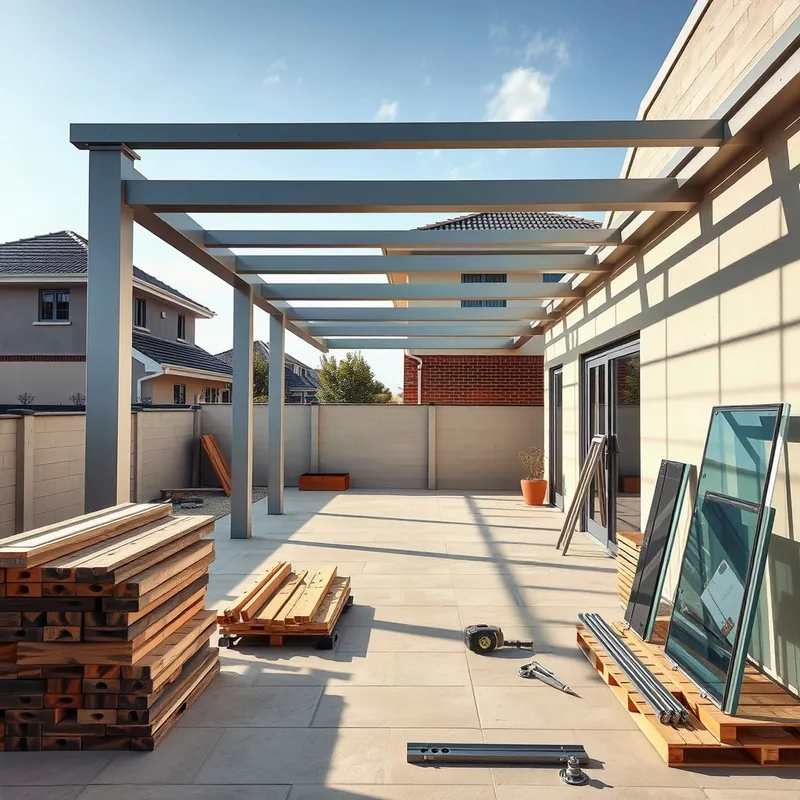
Fixed timber slats spaced 50 to 80 mm apart reduce direct sun by around 60 percent while allowing breeze circulation — a meaningful comfort factor in Dubai's humid summer nights. Motorized aluminum louvers give clients the flexibility to close the roof fully during Shamal dust events in May through July, preventing abrasive silica from settling on garden furniture. Tempered or laminated glass canopy panels suit pergolas over seating areas where rain protection matters; these must carry a scratch-resistant coating because uncoated glass etches visibly after repeated dust-storm exposure and subsequent cleaning.
03
Footings and Ground Anchoring in Dubai Soil
Most of Dubai's developed residential zones sit on fine aeolian sand or sabkha — salt-bearing ground with low bearing capacity that makes standard shallow footings inadequate.
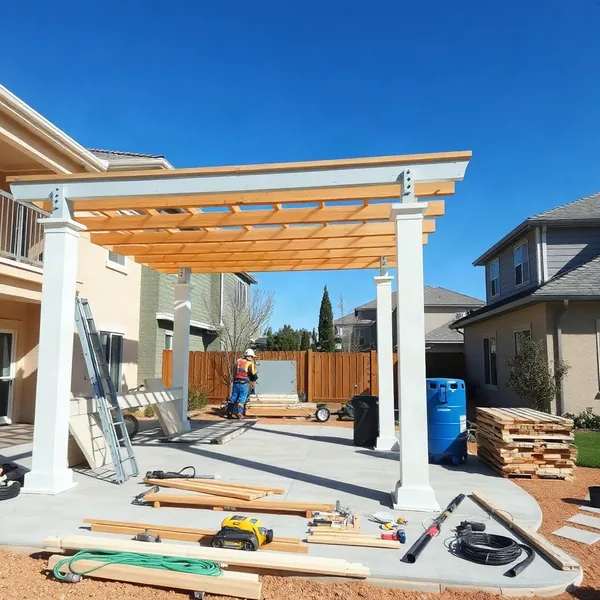
We engineer every freestanding pergola footing to soil-test data: typical solutions are 400 to 600 mm diameter concrete pad foundations reaching stable depth, or helical stainless anchors where excavation is restricted by paving or existing utility runs. All below-grade steel — anchor bolts, base plates, and any embedded sections — is hot-dip galvanized or specified in grade-316 stainless because sabkha salt levels corrode bare mild steel within one to two years. The footing design is included in the stamped drawings submitted to Dubai Municipality and cannot be modified on-site without revised engineering sign-off.
04
Dubai Municipality Permits for Pergola Structures
Any pergola, louvered canopy, or gazebo attached to or built within a Dubai residential or commercial property is classified as a structural addition under Dubai Municipality's Building Department rules.
That means a No Objection Certificate from the developer or master community and a building permit from the municipality are mandatory before fabrication begins — not after. We coordinate the full permit pipeline: connecting clients with a licensed engineering consultant for stamped drawings, submitting through Dubai Municipality, and tracking approval. Depending on drawing complexity and the municipality queue, approval typically takes three to eight weeks. Clients comparing contractors should confirm that the quote includes permit coordination; contractors who skip this step expose clients to stop-work orders and demolition notices.
05
Design Ideas for Small Backyard and Villa Garden Pergolas
Dubai's villa and townhouse stock — much of it built between 2000 and 2015 with flat or lightweight rear terraces — suits freestanding pergola structures that attach to boundary walls rather than the main building frame, keeping structural tie-in minimal. A wood small pergola of 3 × 4 metres over a seating corner takes up less ground than most homeowners expect and can be designed with climbing-plant lattice side panels to add privacy without solid walls. Larger backyard wooden pergola configurations of 5 × 6 metres or more work well with an integrated drainage channel along the low edge of a pitched glass or polycarbonate roof, directing the rare but intense Dubai rainfall away from seating areas. We develop scaled drawings for both compact and full-garden layouts so clients can review proportions before any permit is submitted.
06
Glass Canopy Roofing and Nano-Coating for Dubai Pergolas
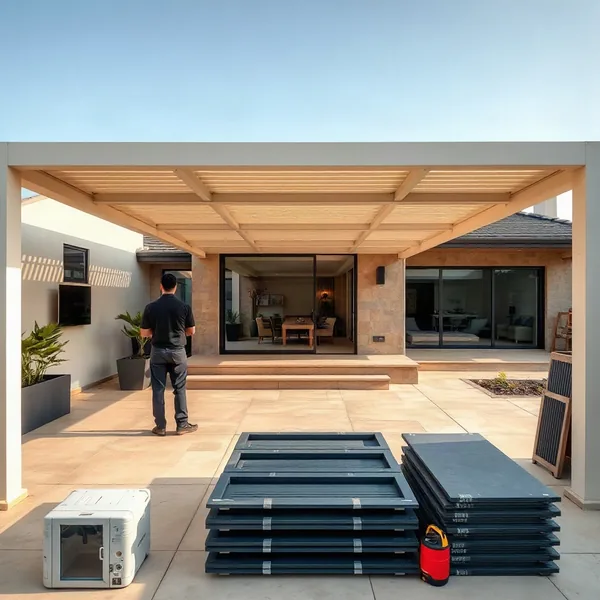
Glazed pergola roofs require two specifications that are specific to Dubai: scratch-resistant tempered or laminated glass to survive post-Shamal cleaning cycles, and a hydrophobic nano-coating applied at installation to slow mineral-scale buildup. Dubai's DEWA-supplied water has total dissolved solids typically between 500 and 700 mg/L; any water that dries on an uncoated glass surface leaves a visible white mineral deposit. The nano-coating causes water to sheet off rather than bead and dry, reducing descaling frequency from monthly to roughly quarterly in most installations. We apply the coating in the workshop before panel delivery so adhesion to a clean glass surface is optimal, and we supply clients with a descaling product compatible with the coating so they can maintain clarity between service visits.